
A scientific deep dive into the mammary organ
Breast anatomy and health encompass far more than simple structural considerations. The breast , this word that evokes much more than anatomy alone , is a fascinating organ located at the crossroads of biological structure, essential physiological function, and major health challenges. Although often reduced to aesthetic considerations in the collective imagination, the breast plays a vital role in breastfeeding and represents a remarkable model of hormonal and developmental adaptation. In this article, dedicated to breast anatomy and health, we explore in detail the anatomy, function, development, physiology, and key health aspects of the breast, combining scientific rigor with educational clarity.
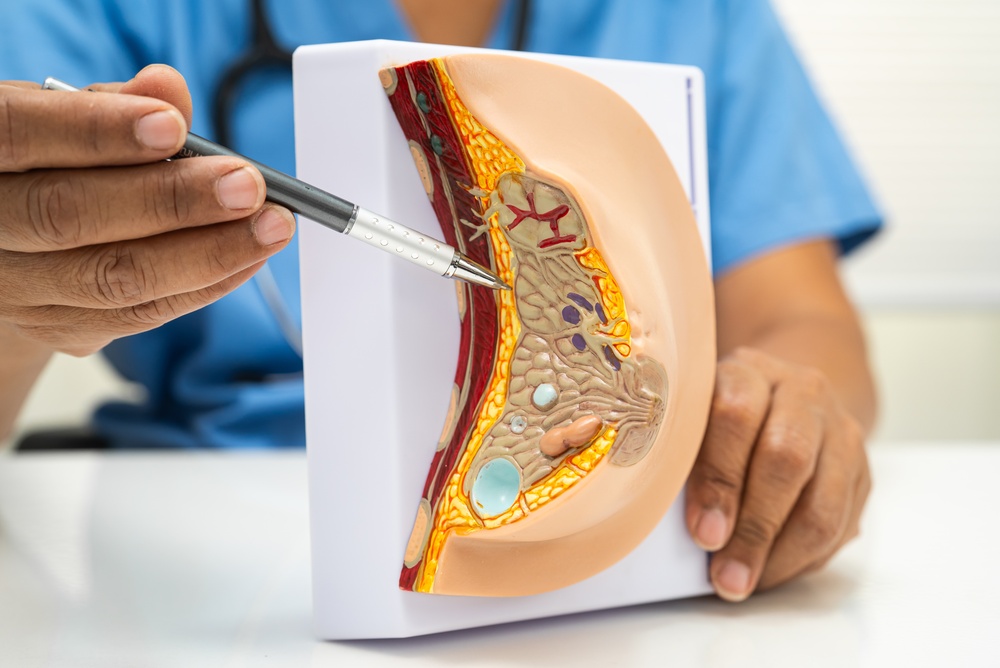
I. Breast Anatomy: A Masterpiece of Organization
1. A Visible Anatomy… and an Invisible One
Superficially, the breast is covered with smooth skin, enhanced by the areola , the pigmented area surrounding the nipple , which contains specific sebaceous glands known as Montgomery tubercles. These glands produce a protective fluid that helps prevent cracking during breastfeeding. (Wikipedia)
Beneath this skin covering, the internal structure of the breast is far more complex. Each breast is essentially composed of three major components: the skin (with nipple and areola), the glandular parenchyma, and the stroma or supporting tissue. (NCBI)
2. The Parenchyma: The Milk Factory
The parenchyma is the glandular tissue responsible for milk production. It consists of numerous lobes , generally between 15 and 20 , each containing multiple lobules. These lobules house the alveoli, small cavities where milk is synthesized by lactating epithelial cells. (PMC)
Lactiferous (milk) ducts connect these lobules to the nipple, allowing milk to flow outward. The configuration resembles a branching tree, much like a river network converging toward a main stream. (PMC)
Fun fact: despite the importance of glandular tissue for lactation, breast volume depends more on adipose tissue than on the amount of secretory tissue. (depistagesein.ca)
3. Stroma and Supporting Ligaments
Surrounding the parenchyma are connective tissues , fibers, fat, and other structural elements , that form the stroma. This network supports and maintains the overall shape of the breast. Among these structures, Cooper’s ligaments, named after surgeon Astley Cooper, play a key role in maintaining breast integrity. (Wikipedia)
These ligaments, like invisible suspension cables, extend from the deep muscular fascia to the skin, providing support and shape. Over time, their gradual stretching can contribute to natural breast ptosis , the well-known “sagging” that is not simply due to insufficient bra support. (Wikipedia)
4. Vascularization and Lymphatic Systems: The Essential Network
The breast has an impressive vascular supply. Blood flow is primarily provided by branches of the internal thoracic artery, the axillary artery, and intercostal arteries. This vascularization is essential not only for tissue nutrition but also for lactation activity. (Wikipedia)
Surrounding this vascular tissue is a dense lymphatic network. Lymphatic circulation is crucial for local immune defense and for understanding the spread of diseases such as breast cancer. (PubMed)
II. Development and Transformations Throughout Life
1. Embryonic Origins
The breast does not suddenly appear at puberty , its development begins in the embryo. It arises from complex interactions between the epidermis (future parenchyma) and the mesenchyme (future stroma), orchestrated by specific molecular signaling pathways. (PMC)
2. Puberty and Hormonal Maturation
During puberty, under the influence of sex hormones such as estrogen and progesterone, glandular tissue develops rapidly: ducts elongate and branch, and lobules form. This maturation gives the breast its adult shape. (PMC)
3. Pregnancy and Lactation: Functional Peak
Pregnancy induces dramatic changes: lobules multiply and specialize for milk production, a process known as mammogenesis. Secretory cells become highly active, preparing for breastfeeding. (NCBI)
After childbirth, lactation begins. The hormone prolactin, produced by the pituitary gland, is essential for milk synthesis, while oxytocin triggers contraction of myoepithelial cells, allowing milk ejection during suckling. (NCBI)
III. Physiology: How the Breast Functions Daily
1. Outside of Lactation
In a non-lactating breast, even when milk production is inactive, glandular tissue remains a living organ, responding to hormones, medications, and external stimuli. Studies explore how substances such as caffeine or certain drugs reach mammary duct fluid, revealing physiological differences between lactating and non-lactating breasts. (PubMed)
2. Breastfeeding: More Than Simple Secretion
Breastfeeding is not merely a physiological function , it is a continuous dialogue between the infant and the mother’s body. Nipple stimulation sends nerve signals to the hypothalamus, triggering the release of oxytocin and prolactin, which together coordinate milk production and ejection. (NCBI)
3. Hormonal Adaptation
Breasts are highly hormone-sensitive. During the menstrual cycle, hormonal fluctuations can cause sensations of tightness or pain, particularly in the second half of the cycle , a completely normal phenomenon for many women. (MSD Manuals)
IV. Breast Health: Awareness and Prevention
1. Normal Variations and Asymmetries
Breasts are never perfectly symmetrical , and that’s normal. Shape, size, and density may vary from one breast to the other or from one cycle to another. As long as these variations are not progressive or accompanied by other clinical signs, they are not concerning. (Wikipedia)
2. Self-Examination and Screening
While breast self-examination does not replace a medical exam, becoming familiar with one’s own anatomy can help detect unusual changes , such as a lump, localized thickening, skin retraction, or nipple inversion , that warrant medical consultation. (MSD Manuals)
3. Common Conditions
Breast cysts: fluid-filled sacs, often benign, common in women aged 30 to 50 and linked to hormonal variations. They may fluctuate with the menstrual cycle. (Wikipedia)
Of course, breast cancer remains the primary public health concern associated with this organ. It is a complex disease that can affect different breast tissues and involves multiple risk factors. Daily vigilance, regular screening (mammography according to guidelines), and early treatment are essential to improve recovery outcomes , key elements of breast anatomy and health awareness.
Conclusion
The breast is a marvel of anatomy , an evolutionary feat of biological engineering that fulfills multiple roles, from cultural symbolism to the vital function of breastfeeding, while holding profound significance for women’s health. Understanding breast anatomy and health, its structure, physiology, and lifelong transformations not only deepens appreciation of its complexity but also improves awareness of its signals. In matters of health, knowledge and prevention remain our strongest allies.
Sources
- StatPearls (NCBI Bookshelf) : Anatomy, Thorax, Breast, 2023 , Anatomie et structure détaillée du sein. (NCBI)
https://www.ncbi.nlm.nih.gov/books/NBK519575/ - StatPearls (NCBI Bookshelf) : Anatomy, Thorax: Mammary Gland, 2023 , Structure et fonction de la glande mammaire. (NCBI)
https://www.ncbi.nlm.nih.gov/books/NBK547666/ - Javed AJ, Development of the Human Breast, 2013 , Développement embryonnaire et morphogenèse. (PMC)
https://www.ncbi.nlm.nih.gov/articles/PMC3706056/ - Pillay J, Physiology, Lactation, 2023 , Physiologie de la lactation. (NCBI)
https://www.ncbi.nlm.nih.gov/books/NBK499981/ - McCool WF, Breast health care: A review, 1998 , Revue sur l’anatomie et la santé du sein. (sciencedirect.com)
https://www.sciencedirect.com/science/article/pii/S0091218298000652