
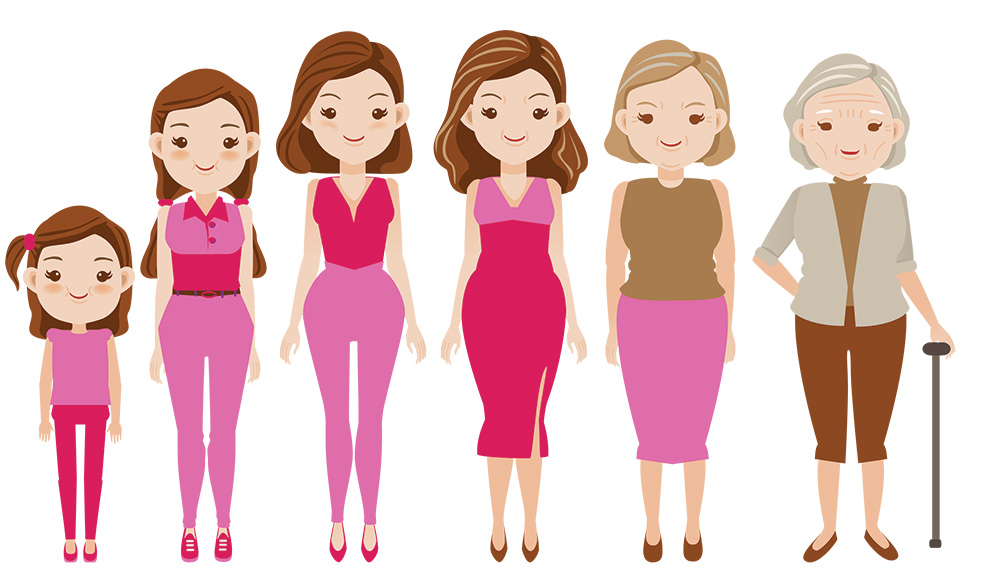
Understanding this inevitable journey with clarity and good humor
Body aging is a universal phenomenon , much like taxes or traffic jams: it eventually happens to everyone. Yet far from being a vague or fatal process, it is a set of very real biological mechanisms that have been studied scientifically for decades. In this article, we explore step by step how the body evolves over the years , not only on the outside, but also internally , and what this truly means for silhouette, femininity, and quality of life.
1. What is aging? A definition worth knowing
Aging is not a sudden event, but a gradual physiological process that affects the structures and functions of the body from midlife onward. It results from a complex interaction of genetic, environmental, and lifestyle-related factors. It should not be confused with diseases that may accompany age , even if their frequency increases over time.
In other words, getting older does not automatically mean becoming ill. It means observing and feeling changes throughout the body , and these changes deserve to be discussed clearly, without dramatization but with realism. This is the foundation of understanding body aging from a scientific perspective.
2. Inside the body: the biological mechanisms of aging
At the microscopic level, cells age, accumulate damage, and function less efficiently. This affects in particular:
- DNA repair and genetic stability
- Cellular metabolism and the elimination of damaged cells
- Intercellular communication and tissue regeneration
These mechanisms are central to the aging process and explain why tissues and organs gradually lose efficiency over time.
Think of cells as tiny factories: the longer they run, the more their machinery wears down. Unlike real factories, the body constantly tries to repair and renew itself , but small inefficiencies eventually accumulate, leading to slightly less fluid functioning.
3. Body composition: fat, muscle, and metabolism
One of the most visible aspects of aging is the change in body composition:
- Muscle mass naturally decreases with age, affecting strength, energy, and silhouette.
- Fat mass tends to increase, especially around the waist.
These changes are not merely aesthetic. They alter basal metabolism and how the body stores and uses energy. Research shows that after age 40, shifts in fat distribution and muscle loss become more pronounced , particularly in women.
In practice, this means two people of the same age can have very different body compositions depending on lifestyle, physical activity, and nutrition.
4. Bones, joints, and bone density
As we age, the skeleton evolves as well:
- Bone formation slows down
- Bone density gradually decreases, increasing osteoporosis risk
- Joints experience wear, sometimes causing stiffness or pain
For women, menopause represents a key turning point, as declining estrogen levels accelerate bone loss. The good news? Regular strength training and appropriate nutrition can slow this process and support musculoskeletal health.
5. Skin, hair, and silhouette: visible changes
The skin is often the first place where time becomes visible:
- Reduced collagen and elastin
- Progressive appearance of fine lines and wrinkles
- Loss of firmness and tone
Hair may become thinner, less dense, or gray. These changes influence self-perception and social views of aging. At the silhouette level, muscle loss and hormonal shifts often lead to fat being redistributed more toward the torso than the limbs.
6. Internal organs: heart, lungs, kidneys , the inside changes too
Beyond appearance, aging affects every system:
- The heart and blood vessels become less flexible
- Lung capacity slightly decreases
- Kidney filtration efficiency declines
- The immune system changes, sometimes reducing resistance to infections
This does not mean illness is inevitable, but rather that the body has fewer functional reserves to respond to stress or injury, which explains longer recovery times with age.
7. Brain and cognition: when gray matter evolves
The brain is not immune to change. Some cognitive functions , such as processing speed or working memory , may decline slightly over time. However, others like vocabulary, experience, and social understanding often remain stable or even improve.
Crucially, brain plasticity does not disappear with age. It may diminish, but it remains present, especially when the mind is regularly stimulated.
8. Aging and silhouette: a multifactorial reality
For those concerned about appearance, understanding body aging means:
- Accepting that some changes are natural
- Recognizing that lifestyle plays a major role
- Understanding that genetics is only one factor among many
Maintaining a healthy silhouette over time requires compensating for natural muscle loss through adapted physical activity, balanced nutrition, and overall healthy habits.
9. Aging well: concrete actions at every age
The good news is that aging is not an irreversible downhill slope. Effective levers include:
✅ Regular physical activity (especially strength training)
✅ A diet rich in protein, fiber, vitamins, and minerals
✅ Stress and sleep management
✅ Maintaining an active social life
✅ Personalized medical follow-up after midlife
Combined, these actions can reduce certain signs of aging while preserving health, independence, and joy of life.
Conclusion: aging with science and serenity
Body aging is an unavoidable biological journey, but it is neither a linear decline nor a hopeless fate. Thanks to scientific progress, we now better understand how tissues, organs, and functions evolve , and how deeply lifestyle influences these changes.Accepting bodily transformations while actively supporting them is about cultivating a positive relationship with your body, at every stage of life. Understanding body aging allows us to age not just longer, but better.
📚Sources
- St-Onge MP, Gallagher D. Body composition changes with aging: the cause or the result? PubMed. https://pubmed.ncbi.nlm.nih.gov/20004080/ (PubMed)
- Fomčenko I, Bikulčienė I, Karčiauskaitė D, Urbonas M, Alekna V, Šapoka V. Age-related variations in body composition and metabolic health: a cross-sectional study in adults. Medicina. 2025;61(11):1951. https://doi.org/10.3390/medicina61111951 (MDPI)
- World Health Organization (WHO). Ageing and health. https://www.who.int/fr/news-room/fact-sheets/detail/ageing-and-health (Organisation mondiale de la santé)