Understanding it better to relieve it better
Hormonal menstrual pain is a common and often misunderstood reality. For many people, it goes far beyond mild discomfort: it can turn several days of the menstrual cycle into a real ordeal, affecting mood, social life, studies, or work. Yet behind this pain lies a precise physiology, a strong hormonal connection, and scientifically validated solutions. Let’s explore this phenomenon together , with clarity, seriousness, and a touch of humanity.
🌀 What is hormonal menstrual pain?
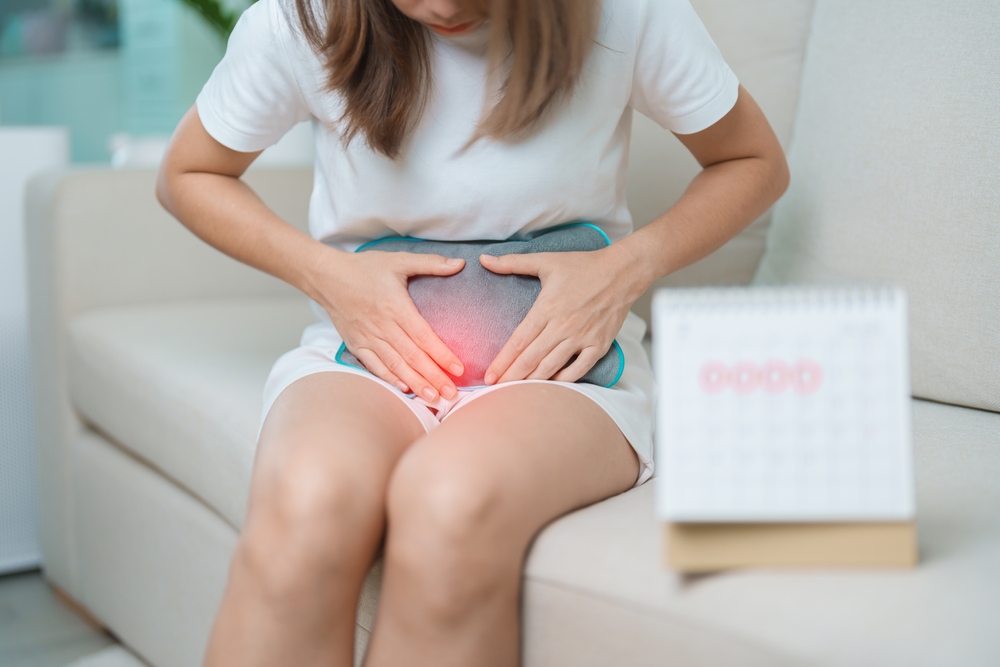
The medical term for intense menstrual pain is dysmenorrhea. It refers to pelvic cramps occurring just before or during menstruation, with or without an underlying gynecological condition.
In its most common form , primary dysmenorrhea , the pain is directly linked to hormonal changes during the menstrual cycle. These changes trigger an increased release of pro-inflammatory substances in the uterus.
It is typically characterized by:
- lower abdominal pain, sometimes radiating to the lower back or thighs;
- intensity that varies from one person to another;
- a duration of roughly 24 to 72 hours at the beginning of menstruation.
This form of hormonal menstrual pain is not a sign of disease, but rather a physiological response to normal cyclic processes.
⚙️ Why does it hurt? A precise hormonal mechanism
As with many menstrual phenomena, hormones and their chemical mediators orchestrate the process , sometimes painfully. Before and during menstruation, the endometrium (uterine lining) sheds. This triggers the release of molecules called prostaglandins, derived from the arachidonic acid pathway.
These prostaglandins cause:
- increased uterine muscle contractions;
- local vasoconstriction (reduced blood flow);
- sometimes temporary ischemia (reduced oxygen supply to the muscle).
The result is intense cramping, similar to deep muscle spasms. When prostaglandin levels are particularly high, the pain can become genuinely disabling.
📊 Two forms: primary and secondary dysmenorrhea
🔹 Primary dysmenorrhea
This is the most common form. Pain results solely from hormonal fluctuations and elevated prostaglandin production, with no identifiable structural disease. It often appears a few years after the first periods and affects a large proportion of menstruating people.
🔹 Secondary dysmenorrhea
This form occurs when a gynecological condition is present, such as:
- endometriosis;
- adenomyosis or fibroids;
- chronic pelvic inflammation.
In these cases, pain may start earlier in the cycle, last longer, or worsen over time. While hormones still play a role, the underlying condition amplifies symptoms.
🎯 Who is affected , and how much?
Estimates vary, but studies suggest that between 45% and 95% of menstruating people experience menstrual pain, with a significant proportion reporting pain severe enough to disrupt daily life.
Severity is influenced by several factors:
- age (often more intense in younger people);
- natural hormonal fluctuations;
- family history of dysmenorrhea.
Even though the underlying mechanism is hormonal, pain intensity differs widely between individuals.
💥 Impact on daily life
Beyond physical pain, hormonal menstrual pain can lead to:
- fatigue, sleep disturbances, headaches;
- difficulty concentrating;
- school or work absenteeism.
Because the pain is cyclical and repetitive, it can also affect mood and long-term quality of life. Some studies associate unmanaged pain with higher levels of anxiety or depressive symptoms.
🩺 How is it diagnosed?
Medical evaluation usually includes:
- a detailed discussion of symptoms;
- a gynecological examination;
- imaging tests if signs of secondary dysmenorrhea are suspected.
The goal is to rule out an underlying condition and confirm that symptoms are linked to cyclical hormonal mechanisms.
💡 Effective solutions
1. Anti-inflammatory drugs (NSAIDs)
Medications such as ibuprofen or naproxen reduce prostaglandin synthesis, thereby decreasing painful uterine contractions. They are often first-line treatments when used appropriately.
2. Hormonal contraception
Combined or progestin-only contraceptives regulate or suppress ovulation, reduce endometrial buildup, and lower prostaglandin production.
3. Non-pharmacological approaches
Methods such as:
- applying heat to the lower abdomen;
- regular physical activity;
- certain complementary therapies;
may help reduce pain intensity, although effectiveness varies between individuals.
🧠 When should you seek medical advice?
Consult a healthcare professional promptly if:
- pain prevents normal daily activities;
- it does not respond to usual treatments;
- it persists outside menstruation;
- signs suggest an underlying condition (e.g., infertility, very heavy bleeding).
📌 In summary
Hormonal menstrual pain is common and primarily driven by increased prostaglandin production, which intensifies uterine contractions and pain.
It may be primary (cycle-related) or secondary (linked to gynecological conditions).
Effective treatments exist, from NSAIDs and hormonal contraception to supportive non-drug approaches.
With personalized care, most people can significantly improve comfort and quality of life.
📚Sources
- PMC. Primary Dysmenorrhea: Pathophysiology, Diagnosis, and Treatment.
👉 https://pmc.ncbi.nlm.nih.gov/articles/PMC8943241/ (PMC) - PMC. Dysmenorrhea, a Narrative Review of Therapeutic Options.
👉 https://pmc.ncbi.nlm.nih.gov/articles/PMC11332412/ (PMC) - PubMed. Dysmenorrhea and prostaglandins: pharmacological mechanisms.
👉 https://pubmed.ncbi.nlm.nih.gov/39161419/ (PubMed) - PMC. Menstrual pain and inflammatory markers.
👉 https://pmc.ncbi.nlm.nih.gov/articles/PMC7068519/ (PMC) - PMC. Menstruations douloureuses chez les adolescentes (endometriosis context). 👉 https://pmc.ncbi.nlm.nih.gov/articles/PMC8315199/ (PMC)