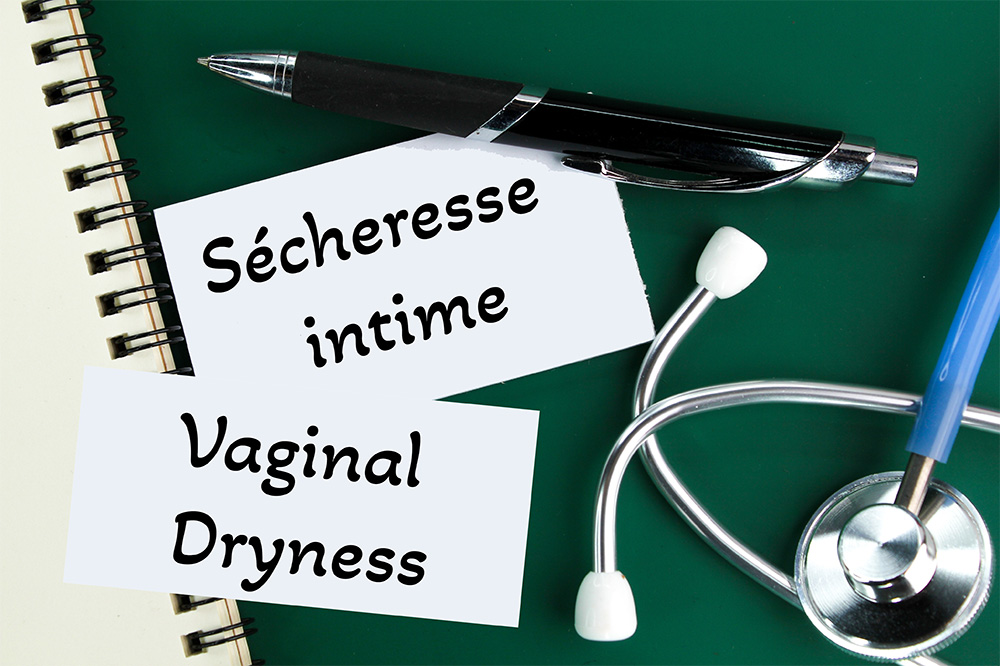
Understanding, Living With, and Relieving Vaginal Dryness
Vaginal dryness is a term that may raise eyebrows or create discomfort when mentioned. Yet it is a frequent and perfectly legitimate reality, often overlooked despite its deep implications for women’s health and well-being. In this educational and rigorous article, we will explore this phenomenon from every angle — biological, psychological, and practical — with a touch of lightness where helpful, while maintaining scientific accuracy.
What Is Vaginal Dryness?
Vaginal dryness refers to a decrease or absence of natural lubrication of the vaginal mucosa. Contrary to the common belief that “the vagina is always moist,” lubrication fluctuates throughout a woman’s life depending on internal and external factors, both hormonal and non-hormonal.
(Source: CHUM – https://www.chumontreal.qc.ca)
Biologically, the vaginal epithelium — meaning the internal wall — produces secretions that maintain moisture essential for tissue health and comfort during daily activities as well as sexual intercourse. In some women, this natural lubrication mechanism becomes disrupted, leading to what is commonly called intimate dryness.
(Source: CHUM – https://www.chumontreal.qc.ca)
Why Is It Sometimes Called Genitourinary Syndrome of Menopause?
Among women’s health specialists, dryness is often part of a broader group of symptoms known as Genitourinary Syndrome of Menopause (GSM). This modern term gradually replaces the older expression “vulvovaginal atrophy” and includes dryness along with changes in genital and urinary tissues associated with declining estrogen levels.
(Source: PubMed – https://pubmed.ncbi.nlm.nih.gov)
In other words, if your vagina feels like a desert at certain stages of life, it is not imaginary — it is a documented biological process.
(Source: PubMed – https://pubmed.ncbi.nlm.nih.gov)
Main Causes
Vaginal dryness can have several origins — much like unpredictable weather.
1. Decreased Sex Hormones
Estrogen plays a crucial role in vaginal health. It stimulates lubrication production, elasticity, and mucosal thickness. When estrogen levels decline — during perimenopause, menopause, or after cancer treatments that affect hormonal production — tissues become thinner, drier, and more fragile.
(Source: PMC – https://www.ncbi.nlm.nih.gov/pmc)
Imagine a delicate fabric deprived of oil becoming brittle — that is similar to what occurs in vaginal tissues. Importantly, this does not only affect older women; some may experience symptoms in their 30s or 40s depending on hormonal history and overall health.
(Source: PMC – https://www.ncbi.nlm.nih.gov/pmc)
2. Medications and Medical Treatments
Certain medications may indirectly reduce lubrication, including antihistamines, some antidepressants, and hormonal therapies used in breast cancer treatment.
(Source: Verywell Health – https://www.verywellhealth.com)
This can be compared to overly dry air: natural moisture production decreases, making tissues more sensitive.
3. Other Causes
Recurrent vaginal infections, hormonal disorders such as hyperprolactinemia, or autoimmune conditions like Sjögren’s syndrome may also contribute to intimate dryness.
(Source: DermoMedicalCenter – https://www.dermomedicalcenter.com)
Even overly aggressive intimate hygiene (vaginal douching, irritating cleansers) can disturb the natural mucosal balance — because excessive cleansing may be counterproductive.
Symptoms
Vaginal dryness is not just “less moisture.” It may include:
- Tightness or itching
- Burning sensations
- Pain during sexual intercourse (dyspareunia)
- Light bleeding or irritation after intercourse
- Discomfort when urinating or even sitting
(Source: CHUM – https://www.chumontreal.qc.ca)
This condition can significantly impact daily comfort and intimate well-being.
Impact on Sexual and Intimate Health
The most noticeable effect is often discomfort during sexual intercourse. Lack of natural lubrication increases friction, which may cause pain, micro-injuries, and even reduced desire due to anticipation of discomfort.
(Source: CHUM – https://www.chumontreal.qc.ca)
Beyond physical discomfort, it may affect intimacy, relationship quality, stress levels, and self-esteem. Sexual health is part of overall well-being.
Persistent vaginal dryness can therefore have psychological as well as physical consequences.
Diagnosis
Diagnosis generally includes:
- Medical history (symptoms and duration)
- Gynecological examination to assess tissue condition
- Additional testing if a specific cause is suspected
(Source: CHUM – https://www.chumontreal.qc.ca)
The objective is not merely to normalize symptoms, but to determine whether appropriate treatment is needed.
Treatment Options
Effective treatments are available and can be tailored to individual needs.
1. Local or Systemic Hormonal Therapy
For perimenopausal or menopausal women, vaginal estrogen (creams, tablets, or rings) can restore epithelial thickness and improve lubrication.
(Source: PMC – https://www.ncbi.nlm.nih.gov/pmc)
These treatments are prescribed and generally well tolerated when individually adapted.
(Source: NHS – https://www.nhs.uk)
2. Lubricants and Vaginal Moisturizers
Available in pharmacies, these products support lubrication externally.
- Lubricants provide immediate relief during intercourse.
- Moisturizers work over time to maintain hydration.
(Source: PMC – https://www.ncbi.nlm.nih.gov/pmc)
Some hyaluronic acid–based formulations have demonstrated positive effects on tissue health.
3. Non-Hormonal Innovations
Non-hormonal gels and pessaries are under study and may benefit women for whom hormonal treatment is not indicated.
(Source: ScienceDirect – https://www.sciencedirect.com)
4. Lifestyle Measures
- Longer foreplay
- Regular use of lubricants
- Gentle hygiene adapted to vaginal pH
- Regular sexual activity to promote local blood flow
Addressing vaginal dryness often involves combining medical and lifestyle strategies.
When to Consult
Consult a healthcare professional if:
- Discomfort persists or worsens
- Pain interferes with sexual life
- Unusual symptoms appear (abnormal discharge or bleeding)
(Source: CHUM – https://www.chumontreal.qc.ca)
A gynecologist, general practitioner, or sexual health specialist can guide diagnosis and propose appropriate management.
Conclusion
Vaginal dryness is common, manageable, and nothing to feel ashamed about. Whether linked to hormonal changes, medications, or other health factors, it deserves attention.
Understanding and addressing vaginal dryness early can restore comfort, protect tissue health, and improve quality of life. Intimate health is an essential part of overall well-being — at every stage of life.
Sources
- PubMed Central (PMC), Factors associated with developing vaginal dryness symptoms …, AWE Waetjen et al.
https://pmc.ncbi.nlm.nih.gov/articles/PMC6136974/ (PMC) - PubMed Central (PMC), Treating vulvovaginal atrophy/genitourinary syndrome of …, D Edwards et al.
https://pmc.ncbi.nlm.nih.gov/articles/PMC4819835/ (PMC) - PubMed Central (PMC), Use of Moisturizers and Lubricants for Vulvovaginal Atrophy, ACA Sarmento et al.
https://pmc.ncbi.nlm.nih.gov/articles/PMC9580673/ (PMC) - Journal review, Vaginal dryness: a review of current understanding and …, JKK Mark.
https://pubmed.ncbi.nlm.nih.gov/38318859/ (PubMed) - PubMed Central (PMC), Current treatment options for postmenopausal vaginal …, I Naumova et al.
https://pmc.ncbi.nlm.nih.gov/articles/PMC6074805/ (PMC)