Anatomy, Functions & Female Wellness Essentials
🧠 Introduction – Why Finally Talk About the Perineum?
The perineum: a name that sounds slightly mysterious, nestled between intimacy and anatomy, often ignored until it makes itself known. Yet behind this small word lies a major structure for physical health, sexuality, continence, and even posture. For women especially, understanding your perineum means gaining bodily autonomy and everyday comfort. In this article, we will break down , with scientific rigor (without heaviness) , what the perineum truly is, how it works, why it is so valuable, and above all how to better know and care for it throughout the stages of life.
🧩 The Perineum Is Not Just “One Small Muscle”
When we talk about the perineum, many people imagine a single muscle. In reality, it is a coordinated set of complex musculo-fascial structures located at the base of the pelvis. This group is also called the pelvic floor. (PMC –
➡️ General Anatomy
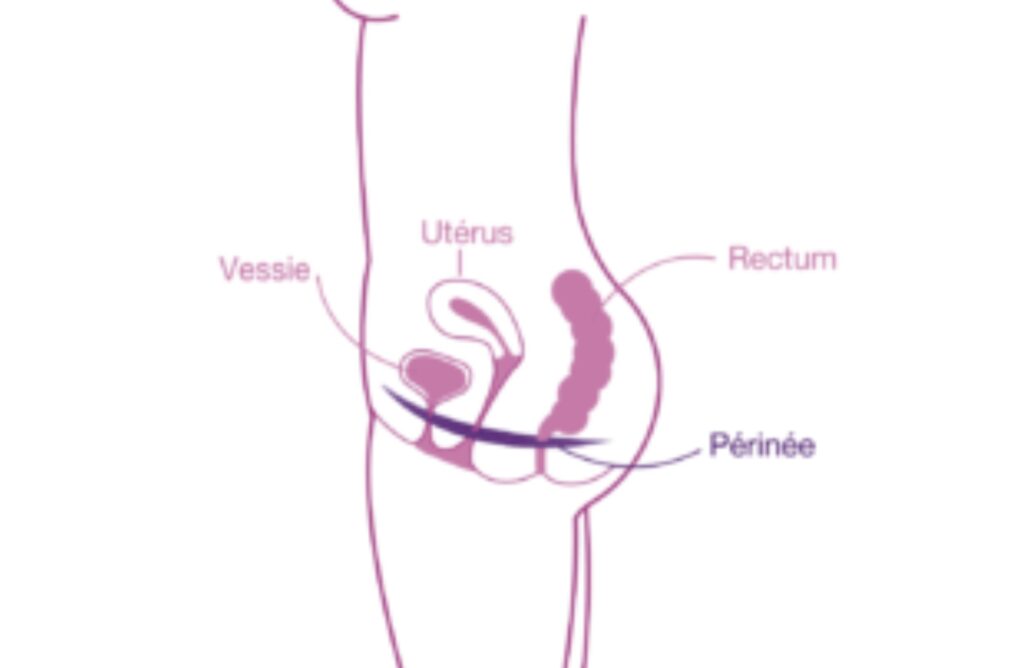
The female pelvic floor resembles a hammock or elastic sheet stretched between the pelvic bones. It separates the pelvic cavity (home to internal organs) from the external perineal region, which includes the urethral opening, the vagina, and the anus.
This hammock is composed of several muscular groups:
- The levator ani muscle, made up of components such as the puborectalis, pubococcygeus, and iliococcygeus, forming the majority of the pelvic floor.
- The coccygeus muscle, smaller but complementary, positioned posteriorly.
- The superficial perineal muscles, surrounding the openings (urethra, vagina, anus).
- Connective tissues and pelvic fascia, extremely important for stability and force transmission.
The perineum is therefore not just one muscle, but a true coordinated 3D structure where muscles, tissues, and nerves work together.
💪 Its Major Functions (Beyond the Stereotype)
The perineum does much more than prevent leaks or “do Kegels.” Its roles are multiple:
1️⃣ Support of Pelvic Organs
The perineum is literally the floor that supports the bladder, uterus, vagina, and rectum in proper position. Without this support, displacement or organ prolapse can occur.
2️⃣ Urinary and Fecal Continence
This muscular hammock controls the opening and closing of the urethral and anal sphincters. This is what prevents urine or stool leakage , even when laughing, coughing, or running.
3️⃣ Sexual Function
Muscle fibers surround the vagina and contribute to sensation and movement coordination during intercourse. Adequate tone supports comfort, pleasure, and sexual response.
4️⃣ Contribution to Posture and Breathing
Less well known: the pelvic floor works in synergy with the diaphragm, deep abdominal muscles, and back muscles to stabilize the trunk and facilitate breathing.
👉 In short, the perineum is simultaneously support system, sphincter regulator, and movement ally. It is a discreet but essential player in overall body function.
📊 What Can Weaken It?
The perineum is not invincible. Various life events , and certain behaviors , can weaken or disrupt its function:
✔️ Pregnancy and Childbirth
Pregnancy places constant pressure on the pelvic floor. During vaginal delivery, muscles stretch, sometimes up to three times their resting length.
This may lead to muscular fatigue, micro-lesions, or functional disorders. That is why many women experience reduced tone after childbirth.
✔️ Age and Hormonal Changes
Over time and with declining estrogen (menopause), tissues lose elasticity and strength. This can weaken muscular support and contribute to continence or pelvic statics disorders.
✔️ Lifestyle Factors
Prolonged sedentary behavior, frequent heavy lifting, chronic coughing, or constipation can place excessive pressure on the perineum, leading to premature fatigue.
✔️ Trauma or Surgery
Pelvic surgeries or local injuries may alter muscular or nerve integrity.
🚀 How Do You Know If Your Perineum Is Functioning Well?
Because we cannot see this muscle like we see our biceps, several signs can indicate whether the perineum is strong or weakened.
🔹 Everything Is Fine If:
✔️ No urinary or fecal leakage
✔️ No sensation of heaviness in the lower abdomen
✔️ You feel your muscles contract when you try to “lift internally”
🔹 Warning Signs:
⚠️ Urine leakage when laughing, coughing, or jumping
⚠️ Pain during sexual intercourse
⚠️ Sensation of pressure or “descent” in the pelvis
⚠️ Persistent constipation
These are not inevitable , they are body signals that deserve attentive listening.
Being attentive is already part of understanding your perineum and responding appropriately.
🤸♀️ Move , But Smartly
Strengthening the perineum is not about creating overly tight muscles. It is about learning coordination between contraction and relaxation , as with any muscle.
👉 So-called Kegel exercises, known as a pelvic floor strengthening method, involve contracting and then relaxing the pelvic floor muscles. They can be very effective when performed correctly.
📌 Important reminder: some individuals have an overly tense or dystonic pelvic floor. In such cases, forcing contractions may worsen tension. Relaxation or guided therapeutic work is more appropriate.
👉 The secret is not just to work hard, but to work accurately: feeling the muscles properly, coordinating with breathing, and consciously relaxing.
🧍♀️ Beyond Exercises: Integrating the Perineum into Daily Life
Talking about the perineum is not limited to occasional exercise sessions. It also means:
✔️ Adopting good daily posture
✔️ Breathing with the diaphragm rather than tightening the lower abdomen
✔️ Avoiding excessive abdominal straining (constipation, heavy lifting)
✔️ Incorporating gentle movements (yoga, Pilates) that respect pelvic floor coordination
Like a delicate instrument, finesse and precision are more effective than brute force.
Developing awareness in daily life is another key aspect of understanding your perineum in a sustainable way.
🩺 When Should You Consult a Specialist?
It is never unnecessary to seek qualified advice, especially if:
- urinary leaks occur regularly
- pain interferes with daily life or sexual intercourse
- heaviness persists despite exercises
- you are pregnant, postpartum, or approaching menopause
A pelvic floor physiotherapist, midwife, urologist, or gynecologist can help objectively assess tone and pelvic floor function.
Professional evaluation can greatly support understanding your perineum and restoring confidence.
✔️ In Summary: 5 Key Takeaways
🔍 The perineum is a complex set of muscles and tissues essential for multiple bodily functions.
🚽 It supports pelvic organs, continence, and sexuality.
🤱 It is particularly challenged by pregnancy, childbirth, aging, and daily pressures.
🧠 Healthy tone depends on contraction + relaxation , not strength alone.
🩹 When symptoms are bothersome, professional care is effective and often liberating.
📚Sources
- PMC (NIH) – Female Pelvic Floor Anatomy, S Herschorn. https://www.ncbi.nlm.nih.gov/pmc/articles/PMC1472875/ (PMC)
- MDPI – Life – The Female Pelvic Floor Fascia Anatomy: A Systematic Search and Review, 2022. https://www.mdpi.com/2075-1729/11/9/900 (MDPI)
- Ovid – Annals of Anatomy – Functional Anatomy of the Female Pelvic Floor, JA Ashton-Miller. https://ovid.com/…/functional-anatomy-of-the-female-pelvic-floor (Ovid)
- PMC (NIH) – Pelvic floor anatomy and applied physiology, V Raizada. https://www.ncbi.nlm.nih.gov/pmc/articles/PMC2617789/ (PMC)
- Kinedoc – Connaissance de l’anatomie pelvi-périnéale, étude anatomique. https://kinedoc.org/work/… (Kinedoc)