
Between Science and Feminine Sensitivity
Introduction : Welcoming the Pelvis as Your Center
In popular imagination and many body-based traditions, the pelvis is often described as the center of femininity , not only symbolically, but also as a vital anatomical crossroads linking mobility, energy, creativity, and grounding. Modern science supports part of this idea: pelvic floor musculature and function deeply influence women’s overall health , including continence, organ support, and sexual and emotional well-being.
A pelvic ritual is therefore not merely a relaxation moment. It can be an invitation to connect with this physical and energetic area, to perceive tension, support anatomical function, and experience its presence within both body and psyche. By combining body awareness practices with scientific knowledge, this ritual can become both holistic and grounded in evidence.
Essential Anatomy of the Female Pelvis: What Science Confirms
Understanding structure before symbolism
Before discussing ritual, it is helpful to understand what the pelvis actually is from a physiological perspective:
The female pelvis is a funnel-shaped bony structure composed of the iliac bones, sacrum, and coccyx. It forms a protective “bowl” for the internal reproductive organs, bladder, and rectum.
The pelvic floor consists of muscles and connective tissues supporting these organs and playing a crucial role in continence, posture, movement, and sexuality.
A harmoniously functioning pelvic floor contributes to core stabilization and supports postural and respiratory balance.
This is not a mystical abstraction: pelvic floor function is clearly demonstrated in scientific literature. Teaching, strengthening, and developing awareness of these muscles improves urinary continence and influences body confidence and perception of the body’s center.
Understanding anatomy enriches the depth of any pelvic ritual practice.
When Ritual Meets Science: The Importance of the Pelvic Floor
Pelvic Floor Muscle Training and conscious engagement
In medical settings, trainers and physiotherapists frequently recommend pelvic floor strengthening exercises, particularly to prevent or treat urinary incontinence , a common condition affecting up to 30% of women at different stages of life.
The primary scientific model is Pelvic Floor Muscle Training (PFMT): a structured set of exercises designed to contract, hold, and relax pelvic floor muscles. These exercises are performed mindfully, incorporate breathing, and are tailored to each woman’s needs.
👉 The connection with a pelvic ritual lies in this intentional body awareness. The ritual is not merely a wellness practice but a conscious embodiment exercise integrating breath, muscular perception, and movement.
Here, science and sensibility converge rather than compete.
Guided Pelvic Ritual: Step-by-Step Practice
A grounded and embodied approach
A pelvic ritual can be designed as a moment of deep self-connection , physical, emotional, and symbolic , integrating elements from mindful body practices.
Step 1 – Preparation and Presence
Sit or lie down in a quiet space.
Breathe slowly, placing one hand on your lower abdomen.
Take a few moments to feel your body, gravity, support, and breath.
💫 The goal is not to reach a mystical state immediately, but to inhabit your body , especially the pelvic region.
Step 2 – Connection and Observation
Bring your attention gradually to your pelvic area. Without trying to “do” anything, simply observe:
- Is there heaviness, lightness, openness, or tension?
- How does the pelvis rest in space?
- How does it move with deep breathing?
This stage resembles reading the map of a territory you are still discovering. It prepares both mind and body for respectful interaction rather than imposed control.
Step 3 – Conscious Activation (Inspired by Pelvic Exercises)
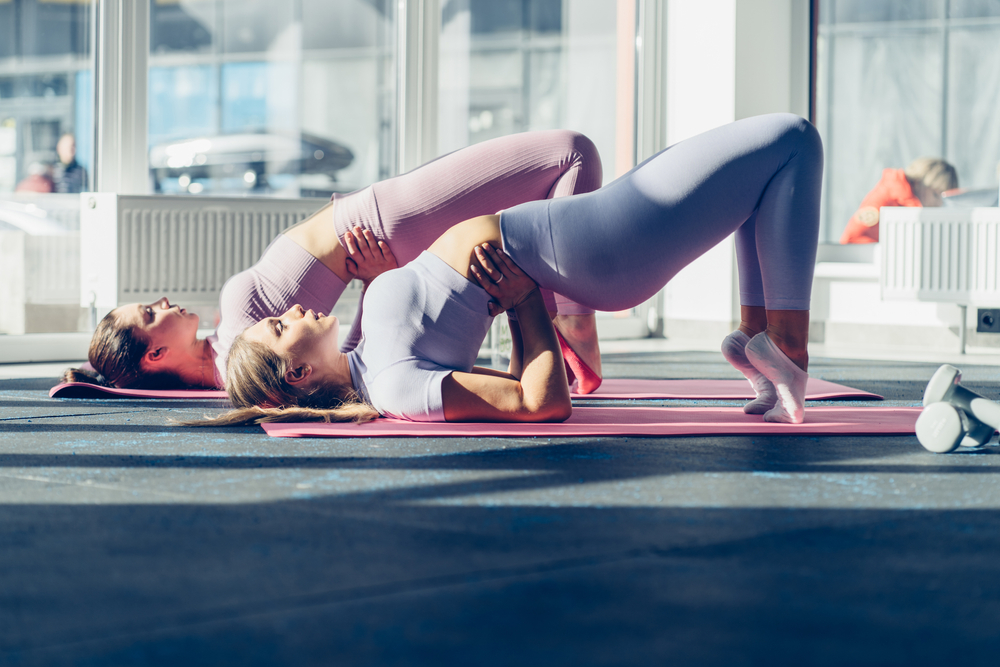
Now that awareness is established, perform simple movements inspired by pelvic strengthening:
- Voluntary pelvic floor contraction: imagine gently lifting the inner pelvic area toward the navel, then release.
- Breath coordination: softly contract during inhalation, release during exhalation.
- Repeat 8 to 12 times with awareness.
👉 This muscular engagement is not merely physical exercise; it unites intention, breath, and body perception , transforming movement into a mindful pelvic ritual.
Step 4 – Energetic and Sensory Dimension
In various body traditions (yoga, meditation, gentle massage), the pelvis is considered a center of creativity and feminine energy , often associated with the sacral chakra (Svadhisthana). These symbolic frameworks do not contradict science; they offer meaningful interpretation for lived sensations while respecting anatomical reality.
You may enrich the practice with:
- Visualization: imagine a soft light circulating within your pelvis.
- Gentle massage of the lower abdomen or lower back (without force).
- A personal affirmation such as: “I am grounded and open to my inner strength.”
These elements are optional but may deepen your ritual experience.
Pelvic Ritual and Global Well-Being
Integration beyond musculature
Beyond pelvic floor mechanics, conscious pelvic engagement can enhance posture, diaphragmatic breathing, grounding sensations, and even the quality of conscious sexuality. By integrating breath, voluntary movement, and sensory awareness, the connection between body and mind strengthens.
This approach aligns with somatic psychology and body-based therapies, which emphasize that bodily experience is inseparable from emotional life, perception, and vitality.
A well-integrated pelvic ritual therefore supports both physical and psychological coherence.
Who Is It For , and Why?
Life stages and transitions
A pelvic ritual may be beneficial at different moments in life:
- Preventively, to support pelvic health.
- After childbirth, to reconnect with and reinhabit the pelvic area.
- During hormonal transitions (such as menopause), when pelvic musculature may be influenced by endocrine changes.
- As a reconnection practice to integrate bodily sensations and inner energy.
This ritual is not a medical treatment but can complement a broader women’s wellness approach.
Limits and Precautions
Medical discernment remains essential
It is important to emphasize that such practices do not replace medical or physiotherapeutic care when specific symptoms are present: chronic pelvic pain, prolapse, significant incontinence, or trauma-related conditions.
In such cases, trained healthcare professionals in pelvic rehabilitation or gynecology are essential partners.
Exercises inspired by pelvic approaches should be adapted individually. Women experiencing severe pain or recent trauma should consult a professional before beginning any practice.
Mindful embodiment must always remain respectful of physiological reality.
Conclusion: An Embodied and Informed Practice
The pelvic ritual is neither an ethereal spiritual trend nor a superficial wellness gesture. It can be a conscious body practice connecting anatomy, breath, sensation, intention, and feminine energy.
By integrating current scientific understanding of the pelvic floor with attentive self-awareness, this practice becomes a powerful moment of bodily recognition and inner intelligence.
Connecting mind and muscle, breath and sensation, bone structure and inner grounding , this is the essence of a pelvic ritual that honors both scientific knowledge and the symbolic richness of feminine experience
Sources scientifiques
- Mostafa DA, Women’s knowledge and practices regarding urinary incontinence and pelvic floor muscle exercises, PMC – National Library of Medicine (2025). Disponible sur PubMed Central : https://www.ncbi.nlm.nih.gov/pmc/articles/PMC12590743/
- Bugge C et al., Pelvic floor muscle training for female urinary incontinence: development of a programme theory from a longitudinal qualitative case study, BMC Women’s Health (2024). DOI disponible via Springer.
- Research on pelvic floor muscle training effectiveness and anatomy (pelvic floor physical therapy overview), ResearchGate publication (date variable).
- Frontiers in Medicine, A comparative study across the menstrual cycle analyzing pelvic floor mechanics (2024).
- International Urogynecological Association (IUGA) report on pelvic floor health evolution (PDF).