
Understanding the different forms of a skin phenomenon that is (too) widespread
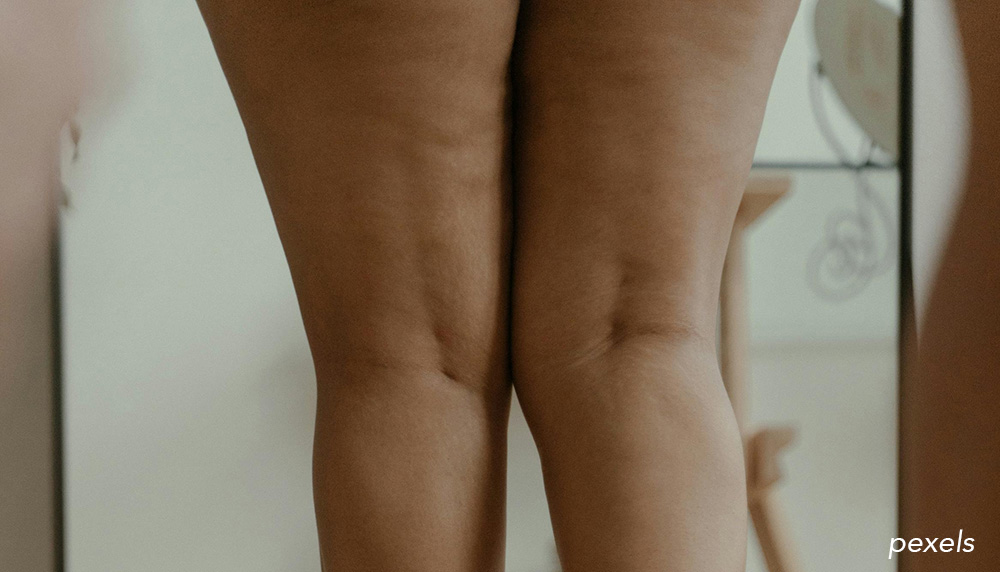
Cellulite — or gynoid lipodystrophy in scientific terms — is an aesthetic modification of the skin characterized by an uneven surface, often described as “orange peel” skin or dimpling. It affects a large majority of women after puberty. It results from complex processes in the subcutaneous tissue, including fat accumulation, alterations of connective fibers, and local water retention, influenced by hormonal, genetic, and circulatory factors. (PMC)
Although cellulite is not a dangerous disease in itself, it can be a source of aesthetic and psychological concern for many. This educational article explores the most widely recognized types of cellulite today, their characteristics, physiological causes, and key distinctions to better understand their origins and possible approaches.
🧠 What Is Cellulite? A Scientific Overview
Before classifying the types of cellulite, it is essential to understand its anatomical and pathophysiological nature:
- Cellulite corresponds to superficial lipodystrophy — a modification of subcutaneous fat and its interaction with connective tissue. (Wikipedia)
- It manifests as fat deposits pushing toward the skin surface, creating visible bumps and depressions. (D-LAB Nutricosmetics)
- Histologically, it often involves altered connective fibers, fluid accumulation (edema), and peri-adipocyte fibrosis. (EM Consulte)
- Cellulite is extremely common in women, with an estimated prevalence of 80–98% after puberty, particularly on the thighs, buttocks, and hips. (PMC)
👉 It is neither an infection nor simply excess weight, but a multifactorial phenomenon dependent on how adipose tissue, collagen fibers, and microcirculation interact beneath the skin.
💧 1. Watery (Edematous) Cellulite
🧬 Key Characteristics
Watery cellulite, also called edematous cellulite, is mainly linked to water retention in tissues and poor blood and lymphatic circulation. (Aroma-Zone)
👩⚕️ How to Recognize It?
- The skin may appear swollen or spongy to the touch. (BODYdharma)
- Dimples are not always visible at rest but appear when the skin is pinched. (Decathlon Sports Advice)
- Commonly affects the legs, ankles, and sometimes the arms. (BODYdharma)
- Often painless and more diffuse than other types. (Decathlon Sports Advice)
🧠 Physiology
This form is particularly associated with poor venous and lymphatic drainage, leading to fluid accumulation in the interstitial space and a swollen skin appearance. (Aroma-Zone)
🤔 Who Is It For?
Even slim individuals can develop this type of cellulite, as it is not necessarily linked to excess fat but rather to inefficient fluid circulation. (Aroma-Zone)
🧈 2. Adipose (Fatty) Cellulite
📌 Definition and Characteristics
Adipose cellulite is one of the most commonly mentioned forms. It is directly linked to the accumulation of subcutaneous fat, increasing the size or number of adipocytes (fat cells). (Dr. Schartz)
👀 What You See
- Visible bumps and uneven areas, especially on the thighs, buttocks, abdomen, and sometimes the arms. (contour-paris.com)
- The skin may look wavy or dimpled. (contour-paris.com)
- Generally soft to the touch and not very painful. (Dr. Schartz)
🧠 Physiological Causes
This type of cellulite results from excess fat storage, often linked to a rich diet and/or low energy expenditure. (Natural Spa) It can compress blood and lymphatic vessels, contributing to poor drainage and local inflammation.
📌 Key Point
Adipose cellulite reflects the fat tissue itself. It is more pronounced in people with excess weight, but it is not exclusively related to body weight. (Dr. Schartz)
🔗 3. Fibrous (Embedded) Cellulite
🧬 What Is It?
Fibrous cellulite, sometimes called embedded or long-standing cellulite, is characterized by fibrosis of collagen fibers surrounding adipocytes and hardening of the subcutaneous tissue. (Laboratoire NHCO Nutrition)
🩹 Clinical Signs
- Very marked and deep appearance, often visible even without pinching the skin. (Laboratoire NHCO Nutrition)
- Skin feels hard to the touch, sometimes with a slightly purplish tone. (blog.cliniquecrillon.com)
- Painful when pinched or pressed. (Laboratoire NHCO Nutrition)
🧠 Pathophysiology
This form suggests that connective fibers have stiffened around fat cells, creating a more resistant structure that is difficult to remodel. (Laboratoire NHCO Nutrition) Fibrosis is often the result of long-standing factors, including prolonged fat accumulation, collagen alteration, and sometimes inflammatory processes. (EM Consulte)
👉 This is generally the most difficult type to reduce, as tissue structures have changed deeply.
⚖️ Complementary Classification Approaches
In addition to the types described above (watery, adipose, fibrous), clinical scales exist to assess cellulite severity.
🧪 Clinical Grades
- Grade I to III (or IV according to some scales): from mild to severe, depending on the appearance and depth of dimpling. (Cleveland Clinic)
These grades do not describe different biological “types,” but rather the degree of visible appearance and aesthetic impact. (Cleveland Clinic)
🧠 Why Distinguish Between Types?
Understanding which type of cellulite predominates is useful to:
- Adapt aesthetic or therapeutic approaches, as some strategies target water retention, others fat tissue, or fibrosis. (PMC)
- Clarify symptom origins, especially when the skin is painful versus purely aesthetic. (Laboratoire NHCO Nutrition)
- Avoid confusion between cellulite and other skin conditions (such as infectious cellulitis, which is completely different). (Wikipedia)
🧾 Summary
| Type of cellulite | Main mechanism | Appearance | Feel | Common in |
| Watery | Water retention, poor circulation | Swollen, less deep | Soft, painless | All profiles |
| Adipose | Fat accumulation | Visible bumps | Soft, mildly painful | Higher fat mass |
| Fibrous | Connective tissue fibrosis | Marked, deep | Hard, often painful | Long-standing cellulite |
💡 In conclusion
cellulite is not a single, uniform entity but a set of skin and subcutaneous manifestations resulting from varied physiological processes. Identifying the different types of cellulite — watery, adipose, fibrous — and understanding their physiological basis is essential to better comprehend them, explain them, and, if desired, guide appropriate aesthetic or lifestyle strategies. (Aroma-Zone)
📚 Sources scientifiques
- Rossi AB, Vergnanini AL. Cellulite: a review. Journal of the European Academy of Dermatology and Venereology. 2000; review article on clinical and histopathological aspects of cellulite. https://pubmed.ncbi.nlm.nih.gov/11204512/ (PubMed)
- Gabriel A. et al. Cellulite: Current Understanding and Treatment. PMC. 2023; overview of etiology and clinical presentation of cellulite. https://pmc.ncbi.nlm.nih.gov/articles/PMC10324940/ (PMC)
- Atamoros FMP. Evidence-based treatment for gynoid lipodystrophy. PubMed. 2018; systematic analysis on cellulite management and understanding. https://pubmed.ncbi.nlm.nih.gov/29707877/ (PubMed)
- Bass LS, Kaminer MS. Insights Into the Pathophysiology of Cellulite: A Review. Dermatologic Surgery. 2020; role of fibrous septae and tissue structure in cellulite. (PMC)