Understanding, Managing, and Turning Discomfort into Comfort
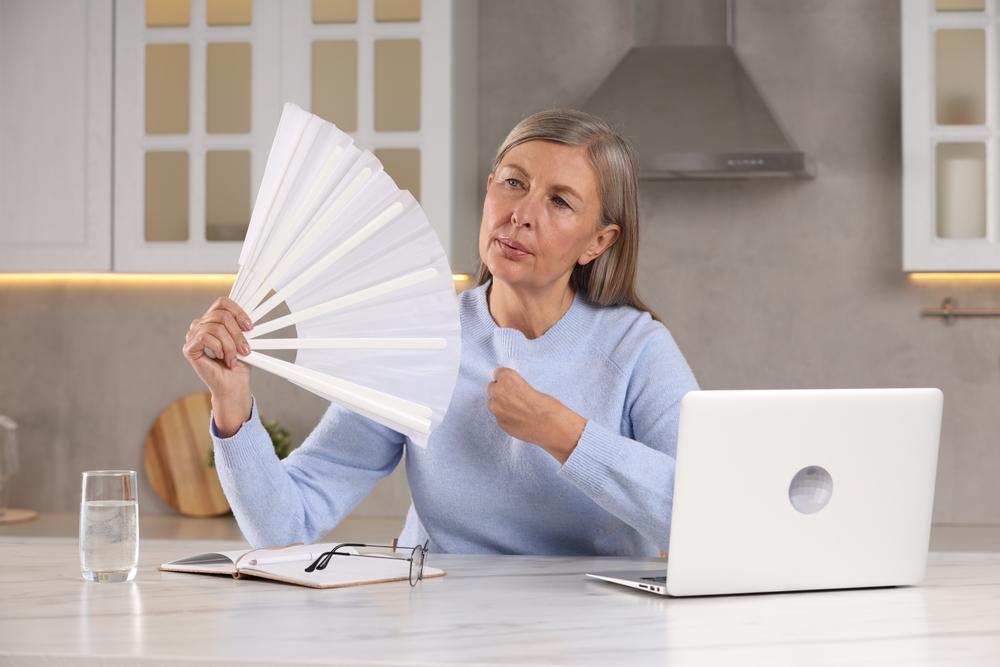
Let’s address a topic that affects the vast majority of women during midlife , hot flashes. This sudden wave of intense heat is more than just a spike in body temperature; it reflects a profound shift in the female hormonal system.
In this menopause-focused guide within the broader Women’s Wellness framework, we explore hot flashes during menopause with scientific clarity, practical advice, and a touch of reassuring perspective.
🌡️ What Is a Hot Flash?
Imagine your internal thermostat suddenly malfunctioning. Without warning, it believes your body is overheating and activates an emergency cooling system.
The result?
- Vasodilation (widening of blood vessels)
- Flushing of the skin
- Sweating
- Rapid heartbeat
- Occasionally followed by chills
This is the hallmark of a hot flash. Clinically, hot flashes are categorized as vasomotor symptoms , meaning they involve blood vessel regulation and temperature control.
Episodes may last from a few seconds to several minutes and can occur during the day or night (night sweats).
🧠 Why Do Hot Flashes Occur During Menopause?
At the center of hot flashes during menopause is a major hormonal shift: the progressive and sustained decline in estrogen production by the ovaries.
Estrogen plays a critical role in thermoregulation , the body’s ability to maintain stable internal temperature.
Normally, the hypothalamus (the brain’s temperature regulator) monitors subtle temperature changes and triggers appropriate responses:
- Shivering when cold
- Sweating when warm
During menopause, declining estrogen narrows what scientists call the thermoneutral zone , the range of temperature the body tolerates without triggering a cooling response.
As a result, even a slight increase in core temperature can provoke a disproportionate cooling reaction: the hot flash.
Neurotransmitters such as norepinephrine also play a role, influencing the autonomic nervous system, which controls involuntary processes like sweating and circulation.
🔢 How Common Are They?
Research is consistent: more than three-quarters of women experience hot flashes during the menopausal transition. Some studies report prevalence rates of 80% or higher.
These symptoms can persist. Clinical data show that hot flashes during menopause may last several years, even beyond the final menstrual period.
🧬 Physiology vs. Sensation
It may feel like the body becomes dramatically overheated during a hot flash. However, research shows that the actual rise in core body temperature is minimal.
The intense sensation stems from an exaggerated vasomotor response , essentially, a hypersensitive thermostat reacting to a small shift.
This explains why some women feel internally overheated even if skin temperature does not dramatically increase.
📉 Factors That Can Worsen Symptoms
While hormonal changes are the root cause, several lifestyle factors can aggravate hot flashes:
- High stress levels (activating the sympathetic nervous system)
- Smoking and alcohol
- Obesity and sedentary lifestyle
- Caffeine
- Spicy foods
Identifying personal triggers can significantly reduce frequency and intensity.
🎯 How to Reduce or Relieve Hot Flashes
The encouraging news: multiple evidence-based approaches can help manage symptoms.
🧘♀️ 1. Non-Pharmacological Strategies
Lifestyle adjustments
- Wear lightweight, layered clothing
- Keep rooms cool and ventilated
- Stay well hydrated
- Practice breathing exercises, yoga, or meditation
Regular physical activity
Moderate exercise helps regulate stress and improve overall well-being, potentially reducing symptom frequency.
Nutritional considerations
- Limit caffeine, alcohol, and spicy foods
- Include phytoestrogen-rich foods (such as soy and certain seeds) if appropriate
💊 2. Medical Treatments
Menopausal Hormone Therapy (MHT)
Hormone therapy is the most effective treatment for severe vasomotor symptoms because it partially restores estrogen levels.
However, it requires individualized medical evaluation due to potential risks depending on personal health history.
New non-hormonal medications
Recent advances have introduced non-hormonal treatments targeting brain pathways involved in thermoregulation.
Neurokinin-3 receptor antagonists, such as fezolinetant (marketed as Veozah®), have demonstrated effectiveness in reducing vasomotor symptoms, offering an alternative for women who cannot or prefer not to use hormone therapy.
🌿 What About Natural Approaches?
Some women prefer complementary strategies.
Plants such as black cohosh or red clover have been studied for potential benefits in vasomotor symptom relief. Their mechanisms may partially interact with estrogen receptors, though results vary among individuals.
Consulting a healthcare professional remains essential before starting herbal supplements.
💡 In Summary
Hot flashes during menopause are neither imaginary nor inevitable suffering , they are a real physiological response to hormonal transition.
They reflect the body’s attempt to maintain internal balance during profound endocrine change.
Fortunately, a range of behavioral, nutritional, and medical strategies can significantly reduce discomfort. The key is individualized care, informed decisions, and support from a healthcare professional.
Menopause is a transition , not a malfunction. Understanding it is the first step toward reclaiming comfort.
📚 Sources
- Freedman RR. Menopausal Hot Flashes. PubMed Central. https://pmc.ncbi.nlm.nih.gov/articles/PMC4612529/
- Bansal R. Menopausal Hot Flashes: A Concise Review. PubMed Central. https://pmc.ncbi.nlm.nih.gov/articles/PMC6459071/
- Menopause and Vasomotor Symptoms: Narrative Review. SciRP. https://www.scirp.org/journal/paperinformation?paperid=146383
- Hot flashes – Symptoms & causes. Mayo Clinic. https://www.mayoclinic.org/diseases-conditions/hot-flashes/symptoms-causes/syc-20352790
- Que faire pour soulager les bouffées de chaleur pendant la ménopause? https://www.lehning.com/blog/articles/soulager-bouffees-de-chaleur-menopause-top-8