
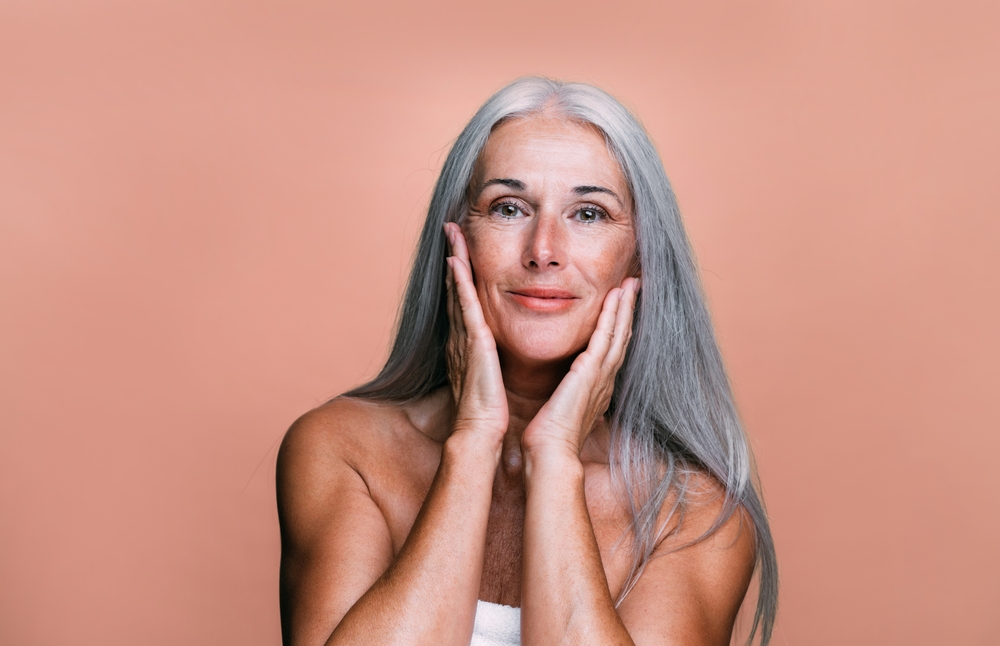
Understanding How Hormones Redefine Your Glow
Menopause — a word that brings as many questions as it does changes in a woman’s life. We often think of hot flashes, sleep disturbances, or mood shifts… but did you know that your skin and hair — two visible messengers of health — also undergo a significant hormonal transformation?
Let’s explore menopause skin and hair changes with scientific clarity and a touch of perspective: what truly happens, why it happens, and how to respond wisely.
When Hormones Lower the Curtain… on the Skin
The skin is not just a surface covering — it is a dynamic organ rich in hormone receptors. It responds directly to biological fluctuations, and menopause is one of the most profound transitions it experiences.
The Estrogen Decline: A Deep Impact
As menopause approaches, ovarian estrogen production gradually declines and eventually drops significantly.
Estrogen plays a key role in:
- Maintaining hydration
- Supporting collagen and elastin production
- Preserving skin thickness
- Enhancing elasticity and vitality
When estrogen levels fall, measurable effects appear:
- Reduced collagen and elastin production
- Decreased natural hydration and water retention
- Thinning of the epidermis
- Increased visibility of wrinkles
- Greater skin dryness and fragility
It can feel as though the skin has lost its internal GPS. Adaptation happens — but visible signs often follow.
Additionally, reduced microcirculation may slow cellular regeneration, contributing to dullness, redness, or increased sensitivity.
Hair: From Full Mane to Lighter Texture?
Just like the skin, hair follicles are hormone-sensitive structures.
The Hormonal Influence
Estrogen helps prolong the anagen phase (active growth phase) of the hair cycle. Hair typically progresses through:
- Anagen (growth)
- Catagen (transition)
- Telogen (resting and shedding)
With declining estrogen levels during menopause, the growth phase shortens and the resting phase lengthens. The result? Increased shedding and reduced density.
This is one of the most common aspects of menopause skin and hair changes.
Visible Effects
Women may notice:
- Slower growth
- Reduced hair density
- Finer texture
- Increased dryness and fragility
Some may also experience shifts in hair distribution — less body or pubic hair, and occasionally increased facial hair. This occurs because androgens exert relatively greater influence when estrogen declines.
Often Underestimated — But Very Real
Changes in skin and hair are not merely cosmetic. They reflect biological processes deeply rooted in endocrine shifts.
Research suggests:
- A majority of menopausal women report at least one significant skin or hair-related symptom.
- Alterations in hair density or texture may affect self-confidence and overall well-being.
While often labeled as “natural,” the impact on quality of life deserves recognition and thoughtful management.
How to Maintain Glow (and Keep Hair Thriving)
The good news? Modern dermatology and evidence-based care offer effective support strategies for menopause skin and hair changes.
Skin Care Strategies
Targeted hydration
Look for products containing hyaluronic acid, ceramides, and barrier-repair ingredients.
Daily sun protection
Thinner skin is more vulnerable to UV damage.
Collagen stimulation
Retinoids, peptides, and certain dermatological treatments may support collagen production.
Consistency matters more than complexity. A gentle but structured routine strengthens the skin barrier and supports elasticity.
Hair Care Approaches
Topical minoxidil
Clinically validated to stimulate growth and reduce shedding.
Gentle hair practices
Avoid excessive heat styling and harsh chemical treatments.
Balanced nutrition and stress management
Overall metabolic health influences follicle function.
Consulting a dermatologist or trichologist can help tailor a personalized plan.
Hormone Therapy Considerations
In some cases, menopausal hormone therapy (MHT) may improve certain skin and hair changes. However, it is not prescribed solely for cosmetic reasons.
Decisions regarding hormone therapy require individualized medical evaluation, weighing overall risks and benefits.
In Conclusion
Menopause is a natural life stage, but its effects on skin and hair are grounded in well-documented biological mechanisms — primarily estrogen decline and hormonal recalibration.
Rather than passively accepting these changes, understanding menopause skin and hair changes, adapting skincare and haircare strategies, and seeking professional advice can make this transition more comfortable and empowering.
Your skin and hair remain allies — they simply require informed support during this new hormonal chapter.
Sources
- B Viscomi et al., Managing Menopausal Skin Changes: A Narrative Review, PMC, 2025. https://pmc.ncbi.nlm.nih.gov/articles/PMC12374573/
- CC Zouboulis et al., Skin, hair and beyond: the impact of menopause, PubMed, 2022. https://pubmed.ncbi.nlm.nih.gov/35377827/
- AK Gupta et al., Menopause and hair loss in women: Exploring the …, ScienceDirect, 2025. https://www.sciencedirect.com/science/article/pii/S0378512225001860
- LB Domínguez, Physiological Changes in Perimenopause and Menopause …, h5mag.com, 2025. https://tks-hpc.h5mag.com/hpc_today_3_2025/column_behind_the_claim_-_physiological_changes_in_perimenopause_and_menopause_approach_with_cosmetic_treatments
- L Pivazyan et al., A Systematic Review and Meta-Analysis, e-jmm.org, 2023. https://e-jmm.org/DOIx.php?id=10.6118%2Fjmm.22042