A Winning Duo for a Smoother Transition
Perimenopause , that pivotal stage in a woman’s hormonal life before menopause , is not just a label change in the reproductive timeline. It represents a global shift in metabolism, mood, and physical well-being. In response to these changes, many women turn to natural approaches, particularly nutrition and plants for perimenopause, to support their bodies.
But what does science actually say? And how can we navigate between tradition, trends, and evidence-based recommendations?
🌿 Chapter 1: Understanding Perimenopause… and Why What’s on Your Plate Matters
Perimenopause is the transitional phase during which the ovaries gradually produce fewer hormones, particularly estrogen and progesterone. This hormonal fluctuation can last several years before menstruation stops completely.
Common symptoms include hot flashes, weight gain, sleep disturbances, mood changes, and increased abdominal fat mass. While medical treatments exist, diet and plant-based strategies are among the most explored , and potentially helpful , natural approaches.
A balanced diet is not a magic wand that erases symptoms. However, it can reduce inflammation, support metabolism, and provide nutrients that the body may increasingly need during this life stage: calcium, vitamin D, essential fatty acids, fiber, and more.
🥗 Chapter 2: Nutrition as a Physical Ally for Hormonal Balance
2.1 Foundations of a Perimenopause-Friendly Diet
An effective nutritional approach during perimenopause relies on simple (but powerful) principles:
- Plenty of fruits and vegetables: rich in antioxidants, fiber, and micronutrients, they help reduce inflammation and support gut microbiota balance.
- High-quality proteins: essential for maintaining muscle mass, which naturally declines with age.
- Unsaturated fats: found in olive oil, avocados, and fatty fish, they support cardiovascular health and overall well-being.
- Calcium and vitamin D: fundamental for preventing bone loss associated with declining estrogen.
Research suggests that plant-rich diets such as the Mediterranean diet, combined with regular physical activity, may help manage weight and reduce cardiometabolic risk, which increases after perimenopause.
2.2 Foods to Favor (and Those to Limit)
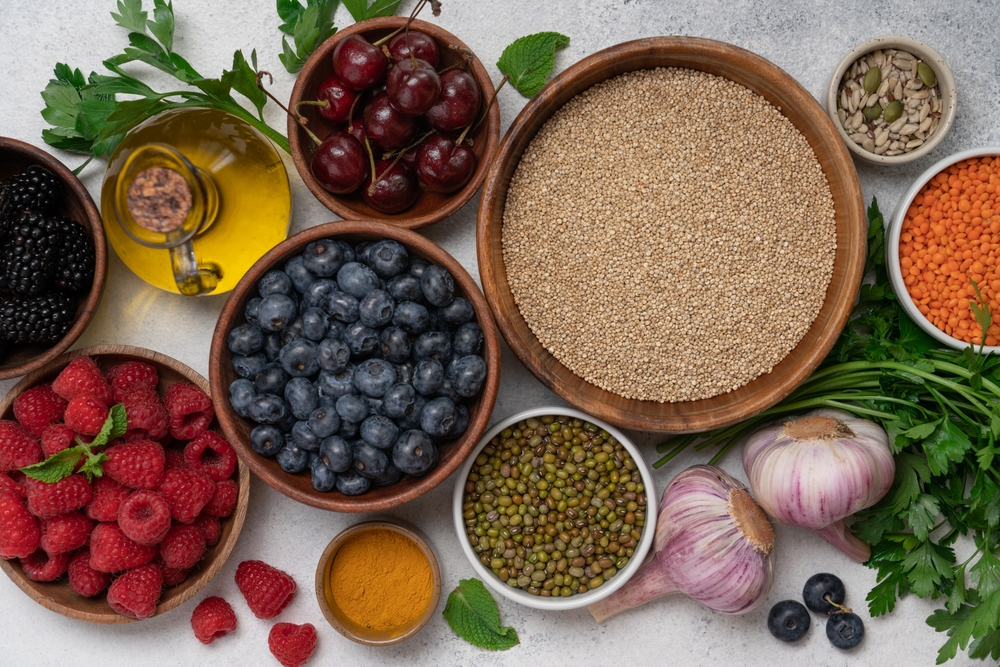
Featured foods include colorful vegetables, legumes, whole grains, seeds, nuts, fatty fish, and fruits rich in vitamin C or polyphenols.
Encourage:
- Fiber-rich foods (vegetables, fruits, legumes) to support digestion and indirectly regulate hormones through gut microbiota.
- Soy products (tofu, edamame) containing natural phytoestrogens , plant compounds that moderately mimic estrogen activity in the body.
- Seeds, especially flaxseed, rich in lignans and essential fatty acids.
Conversely, reducing ultra-processed foods, added sugars, excessive alcohol, and sugary beverages may help limit inflammation, weight fluctuations, and mood swings.
🌱 Chapter 3: Plants That “Whisper” to Your Hormones
Phytotherapy , the use of plants to support health , has long been associated with hormonal balance. During perimenopause, several plants have been studied for their potential symptom relief.
However, natural does not always mean harmless, especially in cases of hormone-sensitive cancers or ongoing treatments. Professional guidance is essential.
3.1 Phytoestrogens: Plant-Based “Estrogen-Like” Compounds
Phytoestrogens are non-steroidal plant compounds whose structure resembles human estrogen closely enough to interact with estrogen receptors , like a key that fits a similar lock but doesn’t fully open the door.
Rich sources include:
- Soy and soy products (soy milk, tofu, tempeh)
- Flaxseeds and certain legumes or nuts
- Red clover and specific herbal extracts used in traditional phytotherapy
Some clinical studies suggest that regular intake may modestly reduce hot flash frequency or improve overall well-being, though effects vary between individuals.
3.2 Targeted Medicinal Plants for Specific Symptoms
Black cohosh (Actaea racemosa)
Traditionally used for vasomotor symptoms (hot flashes, night sweats), it contains triterpenes that may influence certain hormonal pathways. Some studies suggest moderate benefit, though results remain mixed.
Hops
Hop cones contain 8-prenylnaringenin, a potent natural phytoestrogen. They are sometimes used to reduce hot flash severity.
Sage (Salvia officinalis)
Traditionally associated with reducing excessive sweating and heat-related discomfort. Some small studies indicate relaxing effects, though mechanisms remain under investigation.
A small scientific wink: imagine each plant carrying its own biochemical support team , though some of these teams are still in “pilot testing” mode.
🍽️ Chapter 4: Integrating Plants and Nutrition into Daily Life
One challenge is translating knowledge into daily habits. Here are practical strategies:
4.1 Diversify Your Plant Intake
The greater the diversity of plant foods you consume (vegetables, fruits, whole grains, legumes), the broader your intake of phytonutrients.
Some research even suggests that consuming up to 30 different plant types per week may support microbiome diversity and potentially ease hormonal transition symptoms.
4.2 Plan Meals Like a Culinary Herbal Apothecary
Ideas combining flavor and function:
- Breakfast: berry smoothie with ground flaxseed and calcium-enriched plant milk
- Lunch: lentil and quinoa salad with avocado, colorful vegetables, and fresh sage or parsley
- Dinner: sautéed tofu with green vegetables and brown rice
- Snack: nut and seed muffins for omega-3s and fiber
4.3 Hydration and Herbal Beverages
Do not underestimate water, relaxing herbal teas (chamomile, passionflower), or antioxidant-rich green tea. These beverages complement a holistic dietary strategy during hormonal fluctuation.
⚠️ Chapter 5: Practical Advice and Limitations
- Always consult a healthcare professional before introducing new supplements or herbs, particularly if you have a history of hormone-sensitive cancer.
- Plant compounds may interact with medications.
- Phytoestrogen effects are generally moderate , helpful for some, but not replacements for medical care when needed.
- Nutrition should remain a pillar of overall health, not a restrictive or stressful diet. The goal is balance and well-being, not perfection.
🌟 Conclusion
Perimenopause is a biological recalibration. Supporting your body through nutrition and plants for perimenopauseoffers a grounded, science-informed approach that respects both physiology and individuality.
Through balanced eating, thoughtful herbal use, and realistic expectations, this hormonal transition can become less about disruption , and more about adaptation with knowledge and care.
🧠 Sources
- PubMed Central (PMC) , The Importance of Nutrition in Menopause and …
https://www.ncbi.nlm.nih.gov/pmc/articles/PMC10780928/ - Frontiers in Nutrition , Dietary interventions and nutritional strategies for …
https://www.frontiersin.org/journals/nutrition/articles/10.3389/fnut.2025.1702105/full - National Library of Medicine, JAMA , Use of Plant-Based Therapies and Menopausal Symptoms
https://jamanetwork.com/journals/jama/fullarticle/2529629 - PubMed Central (PMC) , A review of effective herbal medicines in controlling …
https://www.ncbi.nlm.nih.gov/pmc/articles/PMC5783135/ - Wiley Online Library: Phytotherapy Research , Systematic review and meta-analysis of plant-based supplements …
https://onlinelibrary.wiley.com/doi/abs/10.1002/ptr.8112