
Beyond the number on the scale, understanding what you’re really made of
1. We wish we had learned at school
It’s a term we hear everywhere , at the gym, at the doctor’s office, in magazines , yet many people still struggle to define it precisely.
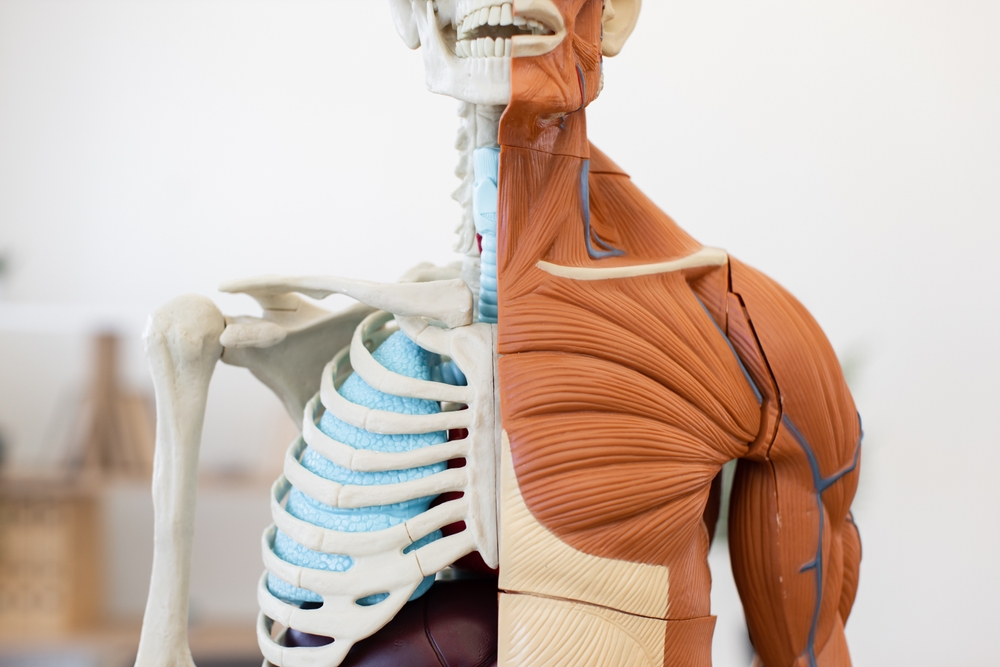
👉 Body composition refers to the detailed analysis of what your body is actually made of: the proportion of fat, muscle, water, minerals (such as bone), and more. In other words, it offers a scientifically refined view of the body that goes far beyond the single number displayed on a scale.
While body weight is simply a total, body composition breaks that total down into compartments , much like slicing a cake to see how much chocolate, cream, or biscuit it contains 🍰.
2. Why weight or BMI alone isn’t enough
To understand why body composition matters, let’s consider a simple example:
Two women are 165 cm tall and weigh 60 kg. To many people, their silhouettes and health goals might seem identical , but everything can change once you look beneath the surface:
- one may have a higher proportion of muscle mass,
- the other a higher proportion of body fat.
This is why Body Mass Index (BMI) can be misleading: BMI does not distinguish between what actually makes up body weight.
In short, two bodies can weigh the same and still be completely different. One may be firm and toned, while the other may have a different distribution of fat and muscle , leading to different silhouettes and health implications.
3. The main components of body composition
Body composition is commonly described using two primary models:
⭐ The two-compartment model
- Fat mass: all adipose tissue, visible or internal
- Fat-free mass: muscles, bones, organs, water , everything that isn’t fat
This model is particularly useful for calculating body fat percentage, a key indicator for understanding your silhouette more accurately.
⭐ The four-compartment model
A more advanced approach that divides the body into:
- Body fat
- Muscle mass
- Bones / minerals
- Body water
➡ This detailed model is frequently used by professionals in medicine, nutrition, and elite sports to assess overall health or evaluate the outcomes of training and nutrition programs.
4. What is body composition analysis really used for?
✅ To understand your silhouette (not just your weight)
A proper analysis can help you:
- determine whether weight loss comes from fat or muscle;
- track the effects of strength training;
- adjust nutrition with precision;
- measure the impact of lifestyle changes.
✅ To better assess health risks
Beyond aesthetics, body composition has real health implications:
🎯 Excess body fat , especially visceral fat , is linked to a higher risk of diabetes, cardiovascular disease, and metabolic disorders.
🎯 Low muscle mass may signal weakness, loss of strength, or even sarcopenia, increasing fall risk in older adults.
👉 In short, body composition is a far deeper health indicator than weight alone.
5. How is body composition measured?
Several measurement methods exist, ranging from home-based tools to highly precise medical techniques:
📊 Bioelectrical impedance analysis (BIA)
These devices estimate body composition by measuring how electrical currents pass through the body.
- ✅ Pros: fast, accessible, non-invasive
- ⚠️ Cons: less precise, influenced by hydration and time of day
🦴 DEXA scan
Used in clinical settings, this is one of the most accurate methods for measuring fat, muscle, and bone mass.
- ✅ Highly reliable
- ⚠️ More expensive and requires specialized equipment
📏 Other methods
- Skinfold measurements
- Hydrostatic weighing
- CT scans or MRI (very precise, rarely used solely for this purpose)
Each method has advantages and limitations, depending on context and goals.
6. What does science say about health impact?
📌 Scientific research shows that body composition significantly influences overall health and longevity. It is shaped by genetics, environment, and lifestyle. Lean mass tends to decrease with age, while fat mass increases , changes that can affect health if not monitored.
👉 This is why tracking body composition provides a more accurate health perspective than relying solely on body weight or BMI.
7. Body composition and femininity: a subtle relationship
When discussing silhouettes , especially in the context of femininity , it’s essential to remember that body composition does not define beauty; it informs health.
Women naturally have a higher proportion of body fat than men, due to physiological and hormonal differences linked to reproductive needs. Rather than chasing idealized fat or muscle percentages, the goal is to find a balance that supports well-being, energy, and performance while respecting individual uniqueness.
8. How to use this knowledge in everyday life
Here are some practical takeaways:
✅ Set realistic goals: lose fat while preserving muscle, or improve strength rather than lowering the scale number.
✅ Track progress wisely: smart scales can help, but professional guidance adds valuable context.
✅ Adapt nutrition and activity: sufficient protein, regular strength training, and proper hydration all matter.
✅ Focus on health over appearance: improved body composition supports metabolism, vitality, and longevity.
9. In summary: what body composition is and why it matters
✅ It describes what truly makes up the body (fat, muscle, water, bone).
✅ It is more informative than weight alone for understanding health and silhouette.
✅ Multiple measurement methods exist, with varying accuracy.
✅ It directly affects health, performance, and metabolism.ec des niveaux de précision variables. (Wikipédia)
✅ Elle a des implications directes sur la santé, la performance et le métabolisme. (PubMed)
Sources
- National Center for Biotechnology Information (NCBI) – Introduction and Background – Body Composition and …
https://www.ncbi.nlm.nih.gov/books/NBK235943/ (CNIB) - The Utility of Body Composition Assessment in Nutrition and Clinical … – PubMed
https://pubmed.ncbi.nlm.nih.gov/34444653/ (PubMed) - Wikipedia – Body composition
https://en.wikipedia.org/wiki/Body_composition (Wikipédia) - InBody – Body Composition 101: The Beginner’s Guide
https://inbodyusa.com/blogs/inbodyblog/28828609-body-composition-101-the-beginners-guide/ (InBody USA) - Journal des Femmes – Balance impédancemètre : interpréter ses résultats
https://sante.journaldesfemmes.fr/fiches-sante-du-quotidien/2892803-balance-impedancemetre-interpreter-ses-resultats/ (Journal des Femmes Santé)