Understanding, recognizing, and celebrating the diversity of our silhouettes
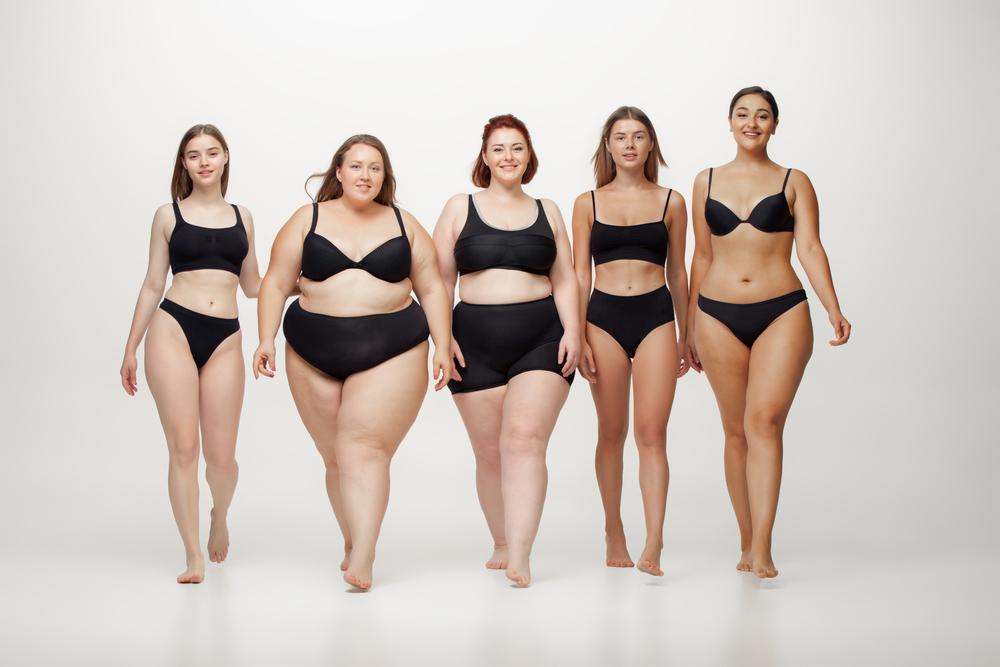
In the fascinating (and sometimes slightly intimidating) world of the human body, female body types occupy a unique place. They tell stories of biology as much as culture, of diversity as much as social representation. Learning to identify and name the main silhouettes is not only about choosing clothes that flatter you or finding jeans that fit well , it also helps us understand how our shapes are built, why they change over time, and how body perceptions influence self-esteem. In this article, we explore female body types through a scientific, anthropometric, and human lens, with the aim of approaching female body types in a positive, informed, and stereotype-free way.
What Does “Female Body Type” Mean?
A woman’s body type simply refers to the overall shape of her body , that is, how shoulders, waist, hips (and often the bust) are proportioned relative to one another. In fields such as fashion, anthropology, health, and social sciences, simplified models are used to describe “typical” silhouettes based on reference points like waist, hip, and bust circumference. (Wikipedia)
Scientifically, these dimensions are not just aesthetic markers. They reflect how fat, muscle, and bone are distributed , factors that influence biomechanics, health indicators, and body perception. (PMC)
How Are Female Body Types Classified?
There are several ways to categorize female body types, some originating in fashion and others in social sciences or biometrics.
1. Common Shape-Based Classifications
This is the most widely known system, often used by stylists and magazines. It compares shoulder, waist, and hip width:
- Rectangle / H / Banana: shoulders, waist, and hips aligned, with little waist definition. (Wikipedia)
- Triangle / Pear: hips wider than shoulders, often with a defined waist. (Wikipedia)
- Inverted triangle / Apple: shoulders broader than hips. (Wikipedia)
- Hourglass: shoulders and hips balanced, with a clearly defined waist. (Wikipedia)
These geometric terms highlight proportional relationships between key body landmarks. (Wikipedia)
2. Letter-Based Classifications (A, V, H, O, X, 8)
Another popular approach uses letters to visually summarize proportions:
- A-shaped body type: hips wider than shoulders.
- V-shaped body type: shoulders broader than hips.
- H-shaped body type: straight silhouette, little waist definition.
- O-shaped body type: rounded silhouette with less waist definition.
- X or 8-shaped body type: balanced shoulders and hips with a marked waist.
This system is simply another way of making female body types easier to visualize and remember.
What Are These Classifications Based On?
Anthropometry: The Science of Body Measurements
To bring rigor to these categories, researchers rely on precise measurements such as:
- waist circumference,
- hip circumference,
- bust circumference.
Ratios like waist-to-hip ratio (WHR) are then calculated to analyze how body mass is distributed. (PMC)
Studies comparing self-identified silhouettes with actual measurements show reasonable consistency between perceived female body types and measured anthropometric ratios, especially in non-obese populations. (PMC)
Although these models simplify the vast diversity of human bodies, they remain useful tools for discussing body proportions in a structured way.
Female Body Types and Health: A Nuanced Relationship
Body fat distribution has real biological implications. Research shows that fat stored primarily around the abdomen (“apple” shapes) versus the hips and thighs (“pear” shapes) is associated with different metabolic profiles. (PMC)
However, body shape alone does not determine health. Lifestyle, genetics, age, and hormonal factors play a major role. A given female body type is not a diagnosis, but rather one piece of a much larger picture. (PMC)
Importantly, studies also show that body perception and self-esteem have a strong influence on both mental and physical health , sometimes more than the body shape itself. (PMC)
Why Is Talking About Body Types So Sensitive?
Although classifying silhouettes may seem neutral, women’s bodies have long been shaped by cultural ideals. The hourglass figure, for example, has often been idealized in art and fashion, influencing beauty standards and expectations. (Wikipedia)
These ideals can have psychological consequences, as body dissatisfaction is linked to stress, eating behaviors, exercise habits, and even reproductive health. This is why discussing female body types requires sensitivity and context, not judgment.
Living Well in Your Body: Practical Perspectives
- ✅ Your body type is not your identity. Every body is unique and evolves over time.
- ✅ No body type is “better” than another. Each silhouette has strengths and challenges.
- ✅ Health cannot be reduced to a shape or ratio. Measurements inform , they do not define you.
Conclusion: Diversity Worth Celebrating
Understanding female body types is not about memorizing labels or following trends. It is about recognizing that a woman’s silhouette results from a complex interplay of biology, culture, life experience, and change. True empowerment comes from informed acceptance , knowing that every body tells a story, and that diversity is not something to correct, but something to celebrate.
📚Sources
- PubMed Central (PMC) , Women’s Perceptions of Their Body Size and Shape. Étude comparant silhouettes auto-déclarées et mesures anthropométriques chez des femmes en âge de procréer. (PMC)
- PubMed , women’s perceptions of their body size and shape. Synthèse de données importantes sur le rapport taille-hanche et les silhouettes féminines. (PubMed)
- PubMed Central (PMC) , Fat Distribution in Women Is Associated With Depot-Specific …. Analyse de l’impact de la distribution de graisse sur les profils métaboliques féminins. (PMC)
- Wikipedia (Body shape) , résumé des classifications anthropométriques des silhouettes féminines basées sur la circonférence bust-waist-hip. (Wikipédia)