Understanding, loving, and inviting your reflection out for a coffee
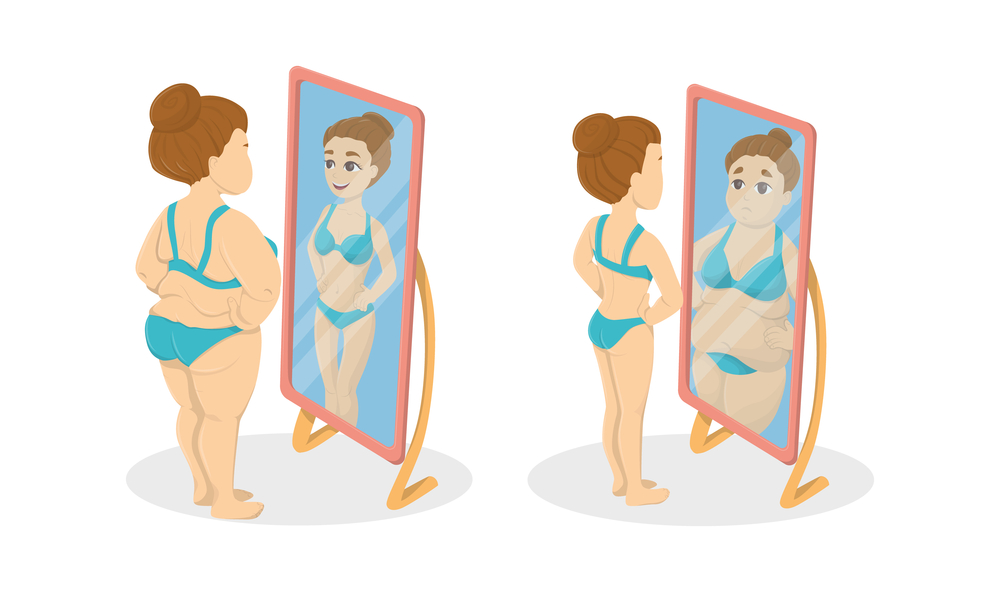
Imagine looking at yourself in the mirror… and the mirror talks back. At first, it says nothing. Then it whispers:
“Tell me , what do you think of me today?”
That simple moment captures what psychologists call self-image: the way each of us perceives, evaluates, and feels about ourselves , our body, our appearance, and our silhouette.
1. What is self-image? (and why it’s more than just a mirror)
The concept goes far deeper than a well-lit selfie. Scientifically, it refers to the set of perceptions, thoughts, and emotions a person has about their physical appearance. It includes not only what we see, but also how those perceptions influence self-esteem, emotions, and behavior.
👇 Key points to remember:
✅ Body image is not limited to body shape.
✅ It integrates thoughts (how I think I look), emotions (how I feel about my body), and behaviors (how this affects my choices).
In simple terms: it’s not just the shape of your hips or the length of your legs , it’s how you feel about them.
2. From childhood to adulthood: a story that starts early
Self-perception doesn’t suddenly appear in adolescence with photo-editing apps. It takes root in childhood and evolves over time, especially during periods of physical and psychological change such as puberty. For girls, these transformations can deeply affect bodily experience and long-term perception of the self.
➡️ For example:
During adolescence, the body can change quickly and unexpectedly. The mirror may become a silent judge rather than a friend , particularly in a society that values certain bodies over others. Wouldn’t it be easier if mirrors smiled back?
3. Body image, self-esteem, and femininity: an intimate trio
If body image is what you see, self-esteem is how you feel about yourself. These two are closely connected: a positive bodily perception tends to enhance self-esteem, while a negative one can diminish it.
Research shows a strong correlation between body perception and self-worth, especially among women:
👉 A negative self-image is often associated with low self-esteem, social anxiety, and general dissatisfaction.
👉 Conversely, a positive body perception supports confidence, self-acceptance, and the ability to face new challenges.
In other words, if your inner dialogue sounds like a playlist of self-criticism, it’s no surprise confidence doesn’t feel like dancing.
4. Silhouette and femininity: a cultural and social lens
Why focus specifically on silhouette and femininity? Because women’s bodies have historically been a central target of social and media norms. Often unrealistic beauty standards strongly influence how women evaluate their own bodies.
Multiple studies show that repeated exposure to idealized images , through media, social platforms, or advertising , can reduce body satisfaction, especially among young women.
👉 Common outcomes include:
➡️ Comparing one’s silhouette to idealized standards can trigger frustration and anxiety.
➡️ Choosing diverse and representative references can foster a more realistic body perception.
5. The traps of self-criticism and internal sabotage
If we were to personify inner perception, many would describe it as an internal judge that never takes a day off , specializing in:
1️⃣ social comparison (“why her and not me?”),
2️⃣ constant criticism (“another flaw!”).
This pattern aligns with what researchers call body dissatisfaction, which can be linked to disordered eating, anxiety, and low self-esteem.
🎯 The scientific message is clear: loving your body doesn’t mean being perfect , it means adopting a realistic and compassionate attitude toward yourself.
6. The social mirror: comparison, influence, pressure
We don’t just look at our reflection , we look at what others are looking at. Social media and digital visual culture have reshaped our relationship with our bodies.
👉 Repeated exposure to “perfect” or edited images increases comparison and self-judgment.
👉 Choosing content that celebrates body diversity can improve body satisfaction.
In short, it’s not only your mirror, but also what you see in others that shapes your self-image.
7. Toward a healthier body perception: strategies and behaviors
Wondering how to build a more positive relationship with yourself? Research suggests several effective strategies:
✅ Shift perspective: focus on what your body can do rather than how it looks.
✅ Practice gratitude: appreciate your body’s functions instead of judging it.
✅ Reduce comparison: limit exposure to idealized imagery.
✅ Cultivate kindness: speak to yourself as you would to a close friend.
✅ Stay socially and physically active: movement, dance, and expressive activities often reinforce positive body perception.
These approaches don’t transform perception overnight, but they create a sustainable path toward balance and kindness.
8. Self-image is not fixed , it evolves
One of its greatest strengths is flexibility. It changes with age, experiences, relationships, successes, and challenges. This means:
🌀 Your bodily story is not set in stone.
🌀 Every moment offers an opportunity to reassess and reshape perception.
What you feel today about your silhouette is not a final verdict , it’s a chapter.
9. What if you spoke more gently to your reflection?
Imagine your reflection as an ally instead of a judge. What would you say? What would you want to hear? Try these phrases:
🌟 “I see you , and I’m proud of you.”
🌟 “Thank you for everything you do for me.”
🌟 “Today, I choose kindness.”
🌟 “My body deserves respect and care.”
These aren’t just positive affirmations , they support healthier cognitive and emotional patterns, a focus of recent research on body positivity and body neutrality.
10. Conclusion: reconciling silhouette and femininity
Self-image is an intimate and evolving journey, shaped by culture, social norms, media , and most importantly, by what you choose to nurture within yourself. It extends far beyond physical appearance, touching self-worth, identity, confidence, and the daily relationship you have with your body.Your silhouette is not a dictator , it is simply one part of who you are. You can learn to observe it with curiosity, compassion, and respect.
And if your reflection could answer back, perhaps it would simply say:
“Thank you for taking care of me , and of yourself.”
Sources
- PMC (PubMed Central) – Body image as a global mental health concern. https://pmc.ncbi.nlm.nih.gov/articles/PMC9970735/ (PMC)
- PMC (PubMed Central) – Body Dissatisfaction, Importance of Appearance, and Body …. https://pmc.ncbi.nlm.nih.gov/articles/PMC6928134/ (PMC)
- Frontiers in Psychology – The relationship among positive body image, body esteem, and …. https://www.frontiersin.org/journals/psychology/articles/10.3389/fpsyg.2024.1304555/full (Frontiers)
- Nature – Relationship between body positivity and body neutrality with body …. https://www.nature.com/articles/s41598-025-22423-2 (Nature)
- MDPI Journal – The Association of Body Image Perceptions with Behavioral and …. https://www.mdpi.com/2072-6643/16/9/1281 (MDPI)