When Well-Being Meets Science
is far more than an improvised relaxation ritual after a long day. It sits at the crossroads of physical well-being, anatomical understanding, and well-documented physiological mechanisms. The buttocks and pelvis , often seen merely as support zones or aesthetic features , actually play a central role in posture, circulation, and overall body balance.
Too often underestimated or overlooked, these areas deserve informed attention. The good news? A few well-chosen gestures, practiced regularly, can make a real difference. Let’s set the scene, unfold the anatomical map, and dive into the topic with precision, curiosity, and a touch of lightness , because self-massage drainage of the pelvis is both accessible and meaningful.
Why Are the Buttocks and Pelvis So Strategic?
An Anatomical and Functional Crossroads
The pelvis is a true hub. It connects the trunk to the lower limbs, supports pelvic organs, stabilizes posture, and absorbs a large share of daily mechanical stress. The gluteal muscles , maximus, medius, and minimus , do far more than shape the silhouette: they are actively involved in walking, standing, and protecting the lower back.
This region is also rich in blood vessels and lymphatic structures. When mobility is reduced , due to prolonged sitting, sedentary habits, or fatigue , circulation can slow down, leading to sensations of heaviness, swelling, or diffuse discomfort.
The Pelvic Lymphatic System: Discreet but Essential
Lymph: the often-forgotten fluid
Unlike blood, lymph has no central pump. Its circulation relies on body movement, breathing, and muscle contractions. The pelvis contains major lymph node groups, particularly in the inguinal and pelvic areas.
When lymph flow slows, tissues may accumulate interstitial fluid, resulting in heavy legs, swelling of the buttocks, or pelvic discomfort. Drainage , manual or through self-massage drainage of the pelvis , aims to support this natural flow.
Self-Massage and Drainage: What Are We Really Talking About?
Two Complementary Approaches
Self-massage refers to manual techniques performed on oneself to mobilize tissues, relax muscles, and stimulate circulation.
Lymphatic drainage involves gentle, slow, rhythmic movements directed along lymphatic pathways.
Applied to the buttocks and pelvis, these gestures combine muscular release with physiological stimulation , always without force.
What Science Says About Manual Lymphatic Drainage
Scientific research on manual lymphatic drainage shows measurable effects on circulation, edema reduction, and quality of life, especially in people with circulatory issues or lymphedema. Studies emphasize the value of gentle, regular, and well-directed techniques.
While self-massage does not replace supervised therapeutic protocols, self-massage drainage of the pelvis is clearly recognized as a relevant complementary approach , for both prevention and daily body maintenance.
Concrete Benefits of Pelvic Self-Massage Drainage
Felt Effects… with Clear Explanations
When practiced regularly, self-massage of the buttocks and pelvis can help:
- improve sensations of lightness in the lower body,
- enhance pelvic mobility,
- support muscular recovery after exercise,
- reduce tension from prolonged sitting,
- improve body awareness and posture.
These benefits stem from better tissue oxygenation, lymphatic stimulation, and fascial release.
When and for Whom Is This Practice Useful?
A Wide Range of People
Self-massage drainage of the pelvis is suitable for:
- people who sit for long hours at work,
- athletes, especially runners or those stressing the hips,
- women experiencing hormonal fluctuations affecting fluid retention,
- individuals feeling pelvic stiffness or discomfort without major pathology.
In cases of diagnosed conditions (lymphedema, significant vascular disorders, persistent pain), medical advice is essential.
Key Principles of Effective Self-Massage
Gentleness First
Lymphatic drainage relies on light, slow, repeated pressure. Pressing harder does not improve results , the lymph flows just beneath the skin.
Direction Matters
Movements should always guide fluids toward natural drainage areas: inguinal lymph nodes, then toward the abdomen.
Consistency
A few minutes, two to three times a week, is more effective than occasional intensive sessions.
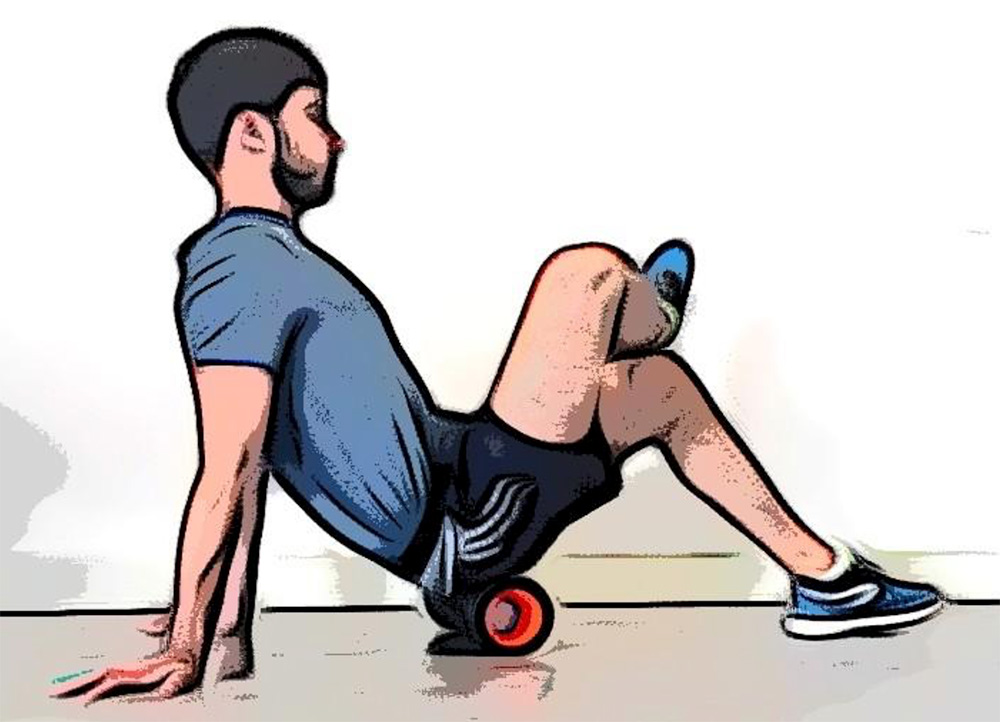
Example Routine for Buttocks and Pelvic Drainage Self-Massage
- Setup: lying down or seated comfortably, calm breathing
- Opening drainage zones: gentle circular pressure in the groin folds
- Buttock mobilization: slow upward movements with flat palms
- Pelvic work: wide circles around the hips, pain-free
- Integration: a few deep breaths to support relaxation
Duration: 10–15 minutes.
Common Mistakes to Avoid
- pressing too hard,
- moving too quickly,
- massaging over sharp or inflammatory pain,
- neglecting breathing, which is essential for drainage.
Self-Massage, Body Image, and Relationship to the Body
Beyond physiological effects, pelvic self-massage invites reconnection with an area often loaded with emotions, judgments, or social representations. Practiced without performance goals, self-massage drainage of the pelvisbecomes a moment of body listening and a more peaceful relationship with one’s shape.
In Summary: A Simple Practice with Multiple Benefits
Self-massage and drainage of the buttocks and pelvis are grounded in solid anatomy and research-validated mechanisms. Without claiming to solve everything, they offer an accessible tool to support circulation, mobility, and daily comfort.
An invitation to care for this central body region , with precision, curiosity, and genuine pleasure in inhabiting movement.
Sources
- PubMed – Manual lymphatic drainage: the evidence behind the efficacy
https://pubmed.ncbi.nlm.nih.gov/38300246/ - PubMed Central – Systematic Review of Efficacy for Manual Lymphatic Drainage Techniques in Sports Medicine and Rehabilitation
https://pmc.ncbi.nlm.nih.gov/articles/PMC2755111/ - ScienceDirect – Manual Lymphatic Drainage Compared with Simple Lymphatic Drainage
https://www.sciencedirect.com/science/article/abs/pii/S0031940605609339 - Springer / PMC – Meta-analysis on effects of lymphatic drainage techniques in the management of carpal tunnel syndrome
https://link.springer.com/article/10.1186/s13018-025-05887-w - PubMed Central – Manual lymphatic drainage and quality of life in patients with lymphoedema or mixed oedema
https://pmc.ncbi.nlm.nih.gov/articles/PMC5951867/