
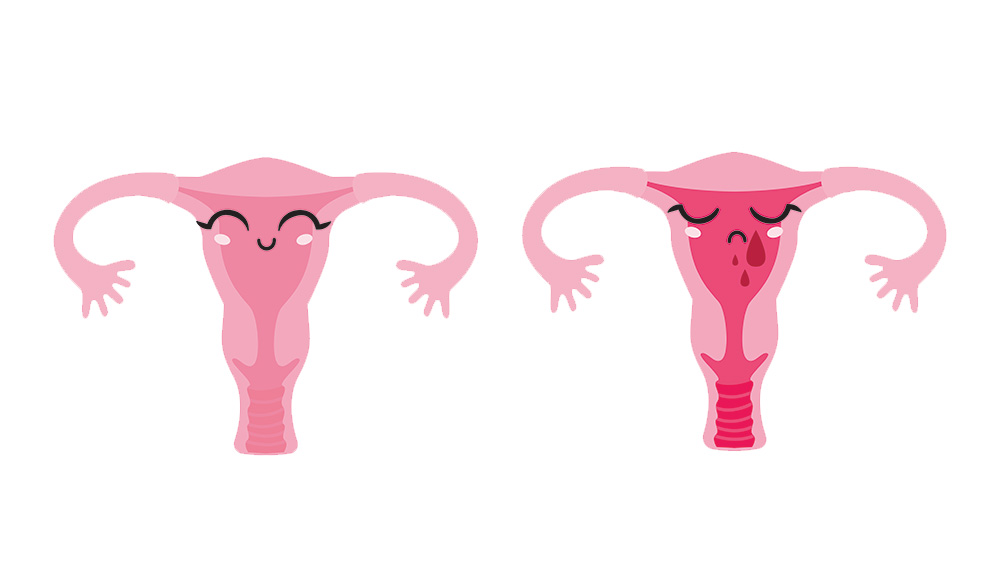
Understanding the hormonal roller coaster
The menstrual cycle is not only a physiological process—it is deeply rooted in brain biology, influencing emotions, mood, and self-perception. In this article, we explore how hormonal variations shape not only the uterus, but also the emotional core. This monthly journey, which lasts an average of 28 days, contains subtle dynamics that deserve to be understood with scientific clarity. Exploring the link between cycle and emotions helps make sense of experiences many people feel but rarely explain.
1. A hormonal symphony
Each menstrual cycle is orchestrated by a series of hormones whose levels fluctuate from one phase to another. The main players include:
- Estrogen, produced mainly before ovulation, associated with energy, mental clarity, and positive mood
- Progesterone, dominant after ovulation, often linked to a calming effect but also to increased emotional sensitivity
- Serotonin, a neurotransmitter influenced by these hormones and closely involved in mood regulation
This hormonal ballet does more than regulate ovulation and menstruation. It also affects the brain, temporarily reshaping neural circuits involved in emotions, memory, and cognitive efficiency.
2. Phase by phase: emotions in motion
The menstrual cycle is generally divided into four key phases:
Phase 1 – Menstruation
This marks the visible start of the cycle. Estrogen and progesterone levels are low, which may result in fatigue, lower energy, or a calmer—or more fragile—mood depending on the individual. For some, this phase feels peaceful; for others, it brings heightened sensitivity.
Phase 2 – Follicular phase
As estrogen rises, many people notice improved mood, clearer thinking, and increased energy. Scientific studies show that phases characterized by higher estrogen levels often correspond to greater positive affect.
Phase 3 – Ovulation
Just before and during ovulation, estrogen peaks. This period is frequently associated with more stable emotions, increased sociability, and improved concentration. Optimism and emotional balance are often at their highest.
Phase 4 – Luteal phase
After ovulation, progesterone increases while estrogen gradually declines. This phase is the most likely to involve emotional fluctuations such as irritability, sadness, or mild anxiety. For a minority of individuals, symptoms may be intense enough to meet the clinical criteria for premenstrual syndrome (PMS) or premenstrual dysphoric disorder (PMDD).
Together, these stages illustrate how closely cycle and emotions are intertwined across the month.
3. What scientific research shows
Scientific literature confirms that mood variations throughout the cycle are not merely anecdotal—they are often measurable.
- A large longitudinal study tracking mood across cycles found a gradual decline starting about 14 days before menstruation, followed by improvement once bleeding begins.
- Another study observed increased positive emotions around ovulation and fewer negative emotions during the same period, supporting the beneficial mood effects of higher estrogen levels.
- Additional research suggests the cycle can influence emotional processing, such as recognizing emotions in others and consolidating emotional memories.
However, these patterns are not universal. For some people, changes are subtle or barely noticeable, while others experience marked emotional shifts.
4. PMS and PMDD: when emotions become overwhelming
Premenstrual syndrome (PMS) includes a set of physical and emotional symptoms that occur just before menstruation. These may involve irritability, sadness, fatigue, and sleep disturbances. Researchers believe these symptoms stem from individual sensitivity to hormonal changes—particularly estrogen withdrawal affecting serotonin levels in the brain.
Premenstrual dysphoric disorder (PMDD), a more severe form of PMS, affects a small percentage of people but can significantly impair quality of life. Importantly, these conditions are not simply “being overly sensitive”—they have biological foundations and may require medical and psychological support.
5. Brain and hormones: a deep interaction
Brain imaging studies show that brain structures involved in emotional regulation are modulated across the menstrual cycle. Hormonal fluctuations therefore influence not only isolated symptoms, but also how the brain processes emotional information.
For example, changes in estrogen levels can directly affect neurotransmitter production, including serotonin. These interactions help explain why some phases of the cycle are associated with higher emotional energy and well-being, while others may feel more challenging.
This complex interaction further illustrates the biological depth of cycle and emotions.
6. Factors that influence emotional impact
Not all cycles are experienced in the same way. Several factors can amplify or reduce emotional fluctuations:
- Chronic stress can disrupt hormonal regulation and intensify emotional variability
- Sleep quality and lifestyle habits play a major role in emotional balance
- Individual hormonal sensitivity varies widely
These elements shape how strongly cycle and emotions are experienced from one person to another.
7. How to live better with cyclical emotions
Understanding your cycle can help you decode emotional patterns. Helpful approaches include:
- Cycle tracking: noting mood, energy, and symptoms to identify personal trends
- Sleep and physical activity: both support emotional stability
- Medical support: essential in cases of severe PMS or PMDD
Cyclical emotions are not a fatality. Knowing how your body works allows you to adapt emotional regulation strategies more effectively.
8. Conclusion
The relationship between the menstrual cycle and emotions is an area of rapidly advancing science. Ovarian hormones influence far more than fertility—they deeply modulate brain chemistry and, consequently, how we feel.
Contrary to oversimplified beliefs, these effects are neither automatic nor identical for everyone. They arise from complex interactions between hormones, neurotransmitters, the brain, lifestyle, and personal experience.Understanding cycle and emotions is not just a scientific curiosity—it is a powerful tool for self-knowledge, emotional anticipation, and better emotional management.
Sources
- Pletzer B., Emotion recognition and mood along the menstrual cycle, Hormones and Behavior, 2023. (ScienceDirect)
- Delray K., Tracking mood symptoms across the menstrual cycle, PMC, 2025. (PMC)
- Hromatko I., A Mid-Cycle Rise in Positive and Drop in Negative Moods, PMC, 2023. (PMC)
- Scientific review on PMS and serotonin regulation, NCBI Bookshelf, 2023. (NCBI)
- Sundström Poromaa I., Menstrual cycle influence on cognitive function and emotional processing, Frontiers in Neuroscience, 2014. (Frontiers)