Understanding Sexual Desire in Women
Female libido is not a mythical treasure locked inside a secret vault , it is a living, multifactorial, deeply human experience. It blends hormones, brain chemistry, emotions, relationship dynamics, personal history, and (often underestimated) the small everyday details that make a huge difference.
So if you’ve ever wondered why your desire fluctuates or how it truly works, let’s step behind the scenes of this fascinating intimate engine.
What Is Libido? An Inner Chemistry
Libido is not simply an “urge” or a mechanical need. In biological and psychological sciences, it is defined as a psychobiological drive influenced by internal and external factors: hormones, brain circuits, sensations, past experiences, and relational context. In women, these factors tend to work like an orchestra rather than a solo instrument. (ScienceDirect)
Researchers often distinguish two forms of desire:
- Spontaneous desire, which appears without obvious stimulation
- Responsive desire, which emerges in reaction to intimacy, touch, emotional closeness, or a sensual atmosphere. (rwapsych.com.au)
Rather than having a single “ideal level,” sexual desire in women is dynamic and varies widely depending on the individual and the context.
The Brain: The Real Conductor of Desire
Desire begins in the brain. It is not a simple reflex , it is a complex evaluation of internal and external signals: safety, emotional availability, energy, connection, memories, expectations, and environment.
Studies suggest that women are particularly sensitive to relational and environmental cues when it comes to desire. In other words, female libido is often triggered by a subtle interaction between mind, body, and context , not by biology alone. (PMC)
This means desire is not “unpredictable” or “unstable.” It is adaptive.
Hormones and Variations: A Moving Dance
Sex hormones influence desire, but they do not dictate it in isolation. Here are some key players:
- Estrogen: often associated with increased sensitivity around ovulation in some women. (PMC)
- Testosterone: often described as a “desire hormone,” but its role in women is complex and context-dependent. (ScienceDirect)
- Progesterone and FSH: some studies suggest higher levels may be linked to lower desire. (PMC)
What matters most is that libido is not simply “the sum of hormones.” It is a brain-body interaction influenced by emotional state, energy levels, and daily life. (ScienceDirect)
Why Does Libido Change Over Time?
Desire is not fixed. It naturally varies with age, menstrual cycle, health, relationships, stress, and life circumstances.
Some women experience increased desire around ovulation, while others experience desire that is more contextual and less tied to biology. This is one of the reasons female libido is so rich and diverse. (MSD Manuals)
Stress, Mental Load, and Desire
Stress is a silent enemy of desire. When the brain is in survival mode , dealing with deadlines, responsibilities, fatigue, or emotional overload , it prioritizes coping over intimacy. 🧠💼
This is why stress, anxiety, exhaustion, and mental load are major causes of reduced desire, even when attraction to a partner remains.
Relationships and Emotional Context
For many women, desire is closely linked to relationship quality and emotional connection. Supportive communication, affection, feeling heard, and emotional safety can strongly encourage desire.
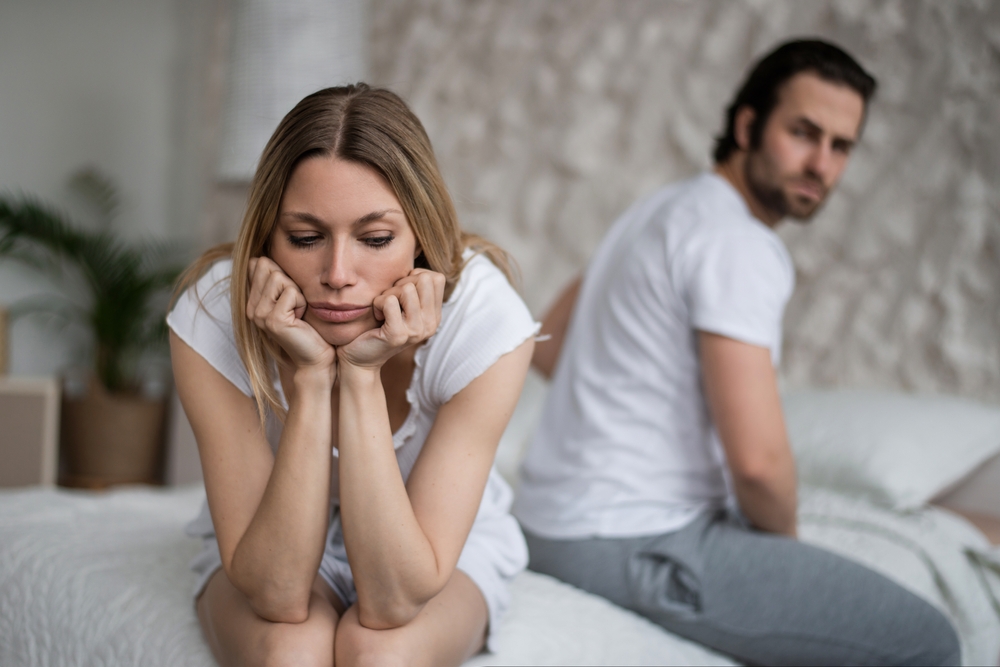
On the other hand, unresolved tension, conflict, or emotional disconnection can suppress it. This doesn’t mean desire depends entirely on the partner , but it often grows in the emotional space between two people. (ResearchGate)
Libido and Body Image
The way a woman experiences her own body plays a major role in desire. A positive self-image, self-acceptance, and a calmer relationship with one’s body encourage openness to pleasure and sensation.
When someone feels uncomfortable in their body, desire often retreats , not necessarily because attraction is gone, but because the mind is focused elsewhere. (PMC)
Low Desire: When Should You Seek Help?
There is a recognized medical category for situations where low desire is persistent and distressing: Hypoactive Sexual Desire Disorder (HSDD). It is diagnosed when the lack of desire causes significant personal distress and is not simply a normal variation. (NCBI)
Consulting a healthcare professional, sex therapist, or psychologist can help explore causes and identify supportive strategies.
Desire and Pleasure: Not the Same Thing
Desire is only one part of sexuality. A person can feel pleasure, arousal, and even orgasm without strong spontaneous desire.
Science distinguishes subjective arousal (feeling turned on) from conscious desire , two experiences that can coexist or function separately. (MSD Manuals)
This highlights how multidimensional sexuality is, and why desire is important but not the only measure of sexual well-being.
Key Takeaways
Professional support exists for those who want it, without judgment , only guidance and care.
Female libido is complex and highly individual.
Hormones matter, but so do the brain, stress, relationships, environment, and personal history.
Low desire is not automatically a medical problem, but it can become one if it causes ongoing distress.
Desire is not linear , it fluctuates, changes, and adapts.
Sources
- Adebisi OY, Female Sexual Interest and Arousal Disorder, StatPearls (2024) , définition et cadre clinique du trouble du désir sexuel féminin. (NCBI)
- Harris EA, Does Sexual Desire Fluctuate More Among Women than Men?, PMC (2023) , variabilité du désir féminin en lien avec des facteurs situationnels. (PMC)
- Graziottin A, Libido: the biologic scenario, ScienceDirect (2000) , interactions hormones et libido. (ScienceDirect)
- Thomas HN et al., A biopsychosocial approach to women’s sexual function, PMC (2016) , facteurs biopsychosociaux influençant le désir. (PMC)
- Cour F, Anatomie et physiologie de la sexualité, ScienceDirect (2013) , composantes biologiques et psychoaffectives du désir sexuel. (ScienceDirect)