Caring for Your Body with Science
Pregnancy is an extraordinary adventure — a time when the female body transforms, adapts, and often reveals a remarkable ability to “handle everything.” Yet between glowing “Instagram-ready” baby-bump photos and the many myths about what you should (or shouldn’t) do, creating a truly appropriate body care routine can quickly become… quite a puzzle.
So let’s take a closer look — with seriousness, clarity, and a welcome touch of lightness — at everything related to body care during pregnancy, from a perspective of overall well-being.
🤰 What Does “Body Care” Mean During Pregnancy?
Body care includes all practices aimed at preserving the integrity, health, and comfort of your body: hygiene, skincare, hydration, beauty routines, sun protection, and even relaxing or aesthetic rituals.
These are everyday or regular habits that, during pregnancy, may require a bit more thought — because certain products or practices call for extra caution.
🧼 Daily Hygiene: Simple, Effective, Adapted
The foundation of any good body care routine is hygiene. Regularly cleansing the body helps prevent irritation, skin infections, and simply allows you to feel comfortable in your own skin.
Many people are already familiar with the basics of personal hygiene: using clean water, gentle cleansing products, and paying attention to the skin overall. This practice dates back to the earliest forms of body care throughout human history, but it takes on particular importance when your body is nurturing new life.
(Wikipedia)
👉 Good to know: During pregnancy, gentle hygiene is recommended. Avoid harsh products, choose fragrance-free formulations and non-irritating ingredients, and avoid very hot bubble baths — your skin may become more sensitive due to hormonal changes.
🌟 Skin Care: Pamper Your Skin
Pregnancy is famous for the well-known “pregnancy glow” — skin that seems to radiate effortlessly. But this is not universal. In reality, hormonal fluctuations can cause:
- Skin that is drier or oilier than usual
- Redness
- Late-onset acne
- Dark patches (often called the “pregnancy mask” or melasma)
- Stretch marks
👉 What specialists say: Dermatologists recommend a minimal routine: cleanse, moisturize, and protect.
(AAD)
🧴 Cleansing
A gentle cleanser without sulfates or fragrances, used morning and evening, is an excellent starting point. It helps remove impurities without irritating the skin.
💧 Moisturizing
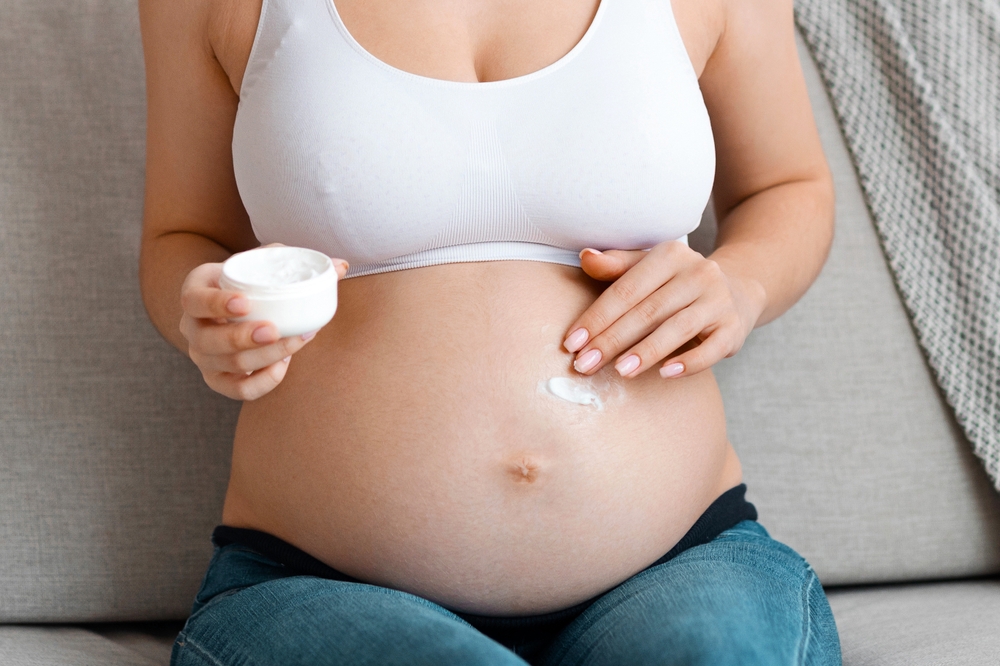
Regular hydration helps maintain a healthy skin barrier — particularly important when your skin stretches as your belly grows.
Creams containing hydrating ingredients such as hyaluronic acid, glycerin, or shea butter can significantly improve skin flexibility and comfort.
☀️ Sun Protection
Sun protection isn’t only for vacations. During pregnancy, hyperpigmentation triggered by sun exposure is common. For this reason, dermatologists recommend a broad-spectrum sunscreen with SPF 30 or higher.
(Naître et Grandir)
Mineral filters such as zinc oxide or titanium dioxide are often better tolerated.
🚫 Ingredients to Monitor (or Sometimes Avoid)
While most cosmetic products are considered safe during pregnancy, some ingredients deserve special attention — or temporary avoidance — to reduce exposure to potentially concerning compounds.
🔍 Ingredients to limit or avoid
Retinoids (vitamin A derivatives)
Widely used in anti-aging or acne products. Their use during pregnancy is not recommended.
(PMC)
Certain skin-lightening agents such as hydroquinone
Generally avoided due to higher absorption rates.
(PMC)
Harsh alcohols, parabens, and phthalates
Often present in conventional cosmetics; some experts recommend limiting exposure as a precaution.
(MonCornerB)
Pure essential oils
Some may be contraindicated, particularly during the first trimester. Professional advice is recommended before using them.
(MonCornerB)
👉 If in doubt, consult your doctor or pharmacist before adding a new product to your routine.
🤲 Stretch Mark Care: Myth or Reality?
Stretch marks are a common concern during pregnancy. Although genetics plays an important role, regular skin care may help reduce their appearance.
Gentle massage using creams or oils rich in emollients such as shea butter or sweet almond oil may improve skin hydration and overall comfort.
While no product can guarantee the complete prevention of stretch marks, consistent care can improve skin elasticity.
🧖♀️ Spa, Sauna, and Hot Baths: Heat Warning
Ah, the spa… relaxing bubbles, comforting warmth. However, during pregnancy, excessive body temperature elevation is discouraged, especially during the first trimester.
Elevated maternal body temperature has been associated with certain prenatal risks, although the evidence is not always definitive.
(Naître et Grandir)
👉 Practical advice if you still want to relax
- Limit time spent in very hot water
- Prefer warm baths rather than hot ones
- Avoid spas hotter than 39 °C (102 °F)
- Exit immediately if you feel dizzy or uncomfortable
💪 Move, Breathe, Feel Your Body
Body care is not limited to creams and lotions. Your entire body deserves attention — and that includes appropriate physical activity.
Simple practices such as:
- Daily walking
- Swimming
- Prenatal yoga
- Gentle stretching
help improve circulation, reduce muscle discomfort, and maintain muscle tone without excessive strain.
Before starting a new exercise routine, consult your healthcare professional.
(MSD Manuals)
Breathing exercises combined with gentle activity can also promote well-being and strengthen the connection between your body and the baby you are carrying.
🪞 What About Beauty Routines?
Hair, nails, makeup — why not?
According to current recommendations:
- Most hair products and makeup are safe as long as they do not contain problematic ingredients such as certain aggressive dyes or controversial chemicals.
(INSPQ) - Beauty treatments like manicures, pedicures, or light makeup can generally continue if gentle, well-formulated products are used.
The key principle is moderation and caution, while respecting your comfort and preferences.
🧠 Well-Being at the Heart of Body Care
Body care is not purely cosmetic — it also relates to self-esteem and emotional well-being.
During pregnancy, these moments of care can become rituals of connection — not only with your body, but also with your baby and yourself.
Taking time to care for your skin, breathe deeply, or simply apply a nourishing cream can create a small moment of calm within a busy day.
🩺 In Summary: Body Care with Peace of Mind
✔ Choose gentle products without controversial ingredients
✔ Moisturize and protect your skin daily
✔ Adapt your routine to your skin’s changes
✔ Be cautious with excessive heat (spas, saunas)
✔ Listen to your body and seek professional advice if needed
Pregnancy is a wonderful stage of life — and caring for your body with awareness is one of the most beautiful gifts you can give yourself.
With a few thoughtful guidelines, kindness toward yourself, and the support of your healthcare professionals, you can enjoy this period with comfort and serenity. 🤍
📚 Sources
- P. Bozzo et al., Safety of skin care products during pregnancy, Canadian Family Physician ;57(6):665-667 — PMC. Lire sur PMC
- Prendre soin de soi pendant la grossesse, MSD Manuals (guide santé femmes). (MSD Manuals)
- Soins pour le corps durant la grossesse, Naître et Grandir. (naitreetgrandir.com)
- Sécurité des soins personnels pendant la grossesse, INSPQ Québec. (INSPQ)
- Dermatologist-approved pregnancy skin care, American Academy of Dermatology (AAD). (aad.org)